
The outdoor unit beside your house was humming on the Fourth of July, and it was humming again on Christmas morning. That is the whole story of a heat pump in Las Vegas in one sentence. The same compressor that fought off a 110 degree afternoon in summer is the one making heat in winter, and the question of how long do heat pumps last has a different answer here than in a place where the system gets a season off.
The number most people hear is 10 to 15 years, with some units reaching 20. That range is honest, but it hides the thing that actually decides where your unit lands: run hours. A heat pump is a compressor, two coils, two fans and a reversing valve, and every one of those parts wears by the hour. In the valley, those hours add up faster than almost anywhere else in the country.
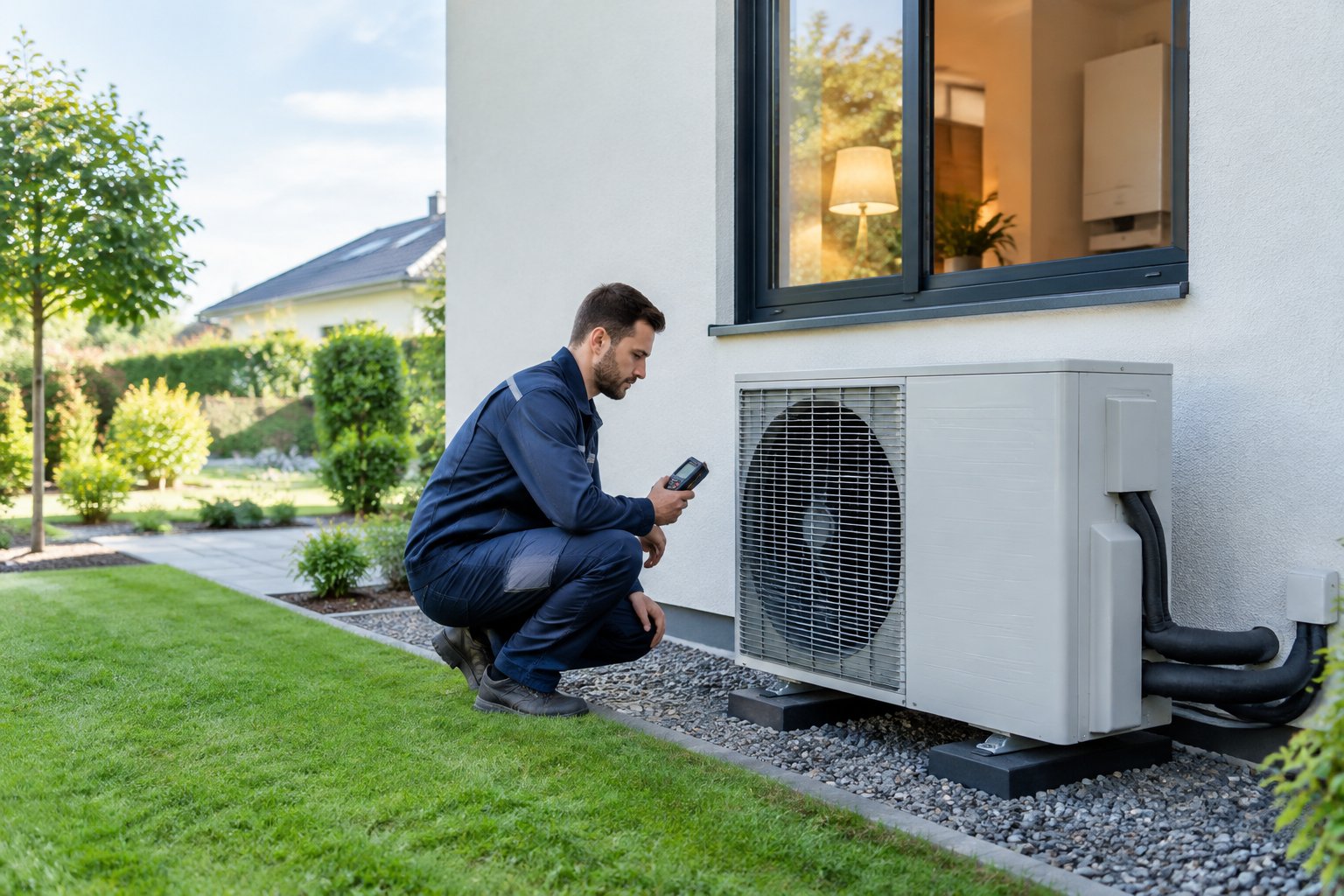
One compressor handles both the summer and the winter
A gas furnace and an air conditioner split the year between them. A heat pump does not get that arrangement. In cooling mode it moves heat from the house to the outdoors, exactly like an air conditioner. In heating mode the reversing valve flips the flow and it pulls heat from the outdoor air into the house, even on a 40 degree morning.
Both directions use the compressor, the outdoor fan, the indoor blower and the refrigerant circuit. So a heat pump installed in Summerlin in 2016 has, by now, done the cooling work of an air conditioner the same age plus a decade of winters on top. Winters here are mild and short, which keeps the heating hours modest, but the summers are long and brutal, and the cooling hours alone would tire a unit in a northern city.
That is why heat pumps in desert cities tend to land toward the lower end of the lifespan range unless they are looked after, and why the age of the unit tells you less than the way it has been run.
Summer heat is harder on a heat pump than winter cold
The hardest hour of the year for a Las Vegas heat pump is not a January night. It is a July afternoon when the air entering the outdoor coil is 110 degrees and the unit is being asked to push heat out into it. The compressor runs at high pressure, the outdoor fan motor works in air hot enough to cook electronics, and the run capacitor sits in a metal box baking in the sun.
Capacitors and contactors are the first casualties of that environment. They are small parts and quick to replace, but a capacitor that fails in August takes the whole system down with it, and repeated hard starts from a weak capacitor shorten the compressor's life. The outdoor fan motor is usually next, followed by the compressor itself as it accumulates years of high-pressure summer work.
Winter has its own wear, mostly the defrost cycle. On the handful of damp, cold mornings when frost builds on the outdoor coil, the system reverses for a few minutes to melt it, and the reversing valve and the control board take the workload. Desert winters are dry, so defrost cycles are rarer here than in humid climates, which is one of the few breaks a Las Vegas heat pump gets.
Dust packs the coils, and that is the slow killer
Everything a heat pump does depends on moving air across two coils. The outdoor coil sheds heat in summer and absorbs it in winter. The indoor coil does the opposite. When either coil is coated in dust, the refrigerant cannot exchange heat properly, pressures rise, the compressor runs longer and hotter, and the unit delivers less comfort for more work.
Las Vegas dust finds the outdoor coil from every direction: wind, landscaping, a dog that digs next to it, the gravel yard. Indoors, a filter left in place through a summer lets dust reach the indoor coil, where it mixes with condensate and sets like plaster. The U.S. Department of Energy puts the difference between a well-maintained heat pump and a severely neglected one at anywhere from 10 to 25 percent in energy use, and recommends cleaning or changing filters every three months, cleaning the outdoor coil whenever it looks dirty, and a professional service at least once a year (energy.gov). The extra energy use is the visible effect of dirty coils; the extra compressor hours are the one you do not see.
A heat pump wears out in a recognizable sequence
Like any system, a heat pump fails in stages, and the stage tells you where you are.
Early on, the small electrical parts go: the run capacitor, the contactor, sometimes a fan motor that was undersized for the heat it lives in. These are quick repairs and say little about the unit's future.
In the middle years, the reversing valve may stick, which shows up as a heat pump that cools but will not heat, or the reverse. The outdoor fan motor fails, the defrost control board develops faults, and refrigerant leaks appear at joints and at the coil as years of vibration and expansion take their toll. A leak is a repair, but a coil that keeps leaking is a different conversation, and the post on home warranty refrigerant coverage explains how refrigerant and leaks are treated under a plan.
Late in life, the compressor is the part that decides things. A compressor that is drawing high amps, tripping its breaker, or starting hard after years of summer duty is approaching the end, and on an older unit that uses a refrigerant no longer produced, a compressor failure is often the moment replacement makes more sense than repair.
Shade, airflow and a filter schedule add years
The habits that stretch a heat pump's life are mostly about keeping the coils clean and the unit cool.
Give the outdoor unit room. Two feet of clearance on every side and nothing stacked on top lets it breathe. Keep gravel and mulch from piling against the base. If a tree or a shade structure can keep afternoon sun off it without blocking airflow, the compressor runs cooler, though the unit must never be enclosed.
Rinse the outdoor coil with a garden hose a few times a year, gently and from the inside out if you can reach, and more often during windy, dusty stretches. Never use a pressure washer, which folds the fins.
Change the filter on a schedule that matches the dust. Through summer that often means monthly. Check the condensate drain in spring, since a clogged drain trips the float switch and shuts the system down in the middle of a heat wave.
Have it serviced once a year, and in Las Vegas the best time is spring, before the compressor starts its hardest season. The post on how often an AC should be serviced here applies to a heat pump in every detail, since it is the same equipment doing the same summer job.
Symptoms that say the heat pump is wearing out
A unit that needs a capacitor is not dying. These signs point to something bigger.
The heat pump runs constantly in summer and cannot pull the house below 80, even with clean coils and a clean filter. That is a compressor losing capacity or a refrigerant circuit that cannot hold a charge.
It cools but will not heat, or heats but will not cool, which points to the reversing valve. Loud grinding, screeching or a hard thump at startup, which are the sounds of a fan motor or compressor on its way out. A breaker that trips when the unit starts. Ice on the outdoor coil in summer, or an outdoor unit that stays frosted through a winter morning long after defrost should have cleared it.
Repairs that come every year, especially refrigerant top-ups, are the clearest signal of all. The post on how long AC units last in Las Vegas walks through the same decision from the air conditioning side.
A home warranty covers the years when the parts start to go
The years when a heat pump is most likely to need a fan motor, a reversing valve or a compressor are the years after the manufacturer's parts warranty has ended and, for a newer home, after the builder's warranty has expired too. A home warranty is built for that stretch. Breakdowns from normal wear and tear are covered, and a compressor that has done ten Las Vegas summers is as clear a case of wear and tear as exists.
HVAC coverage, heating and cooling together, is part of every Dwellness plan, so a heat pump is covered as one unit doing both jobs. Air conditioning refrigerant is covered on the Essential Plan and is unlimited on the Premium Plan, which matters for a system where leaks are a common mid-life repair. When the unit fails, you file a service request online whenever it happens or call (702) 641-8888, and a licensed local contractor is dispatched to diagnose it. If the unit cannot be repaired, replacement is decided under the terms of the contract. The details are on the HVAC home warranty page.
A heat pump in Las Vegas does two jobs with one set of parts and no season off, which is why keeping its coils clean and its filter fresh matters more here than almost anywhere. For the failures that come anyway, a plan that already covers the system means the only thing you have to do on a 110 degree afternoon is file the request. Find out what that would look like for your home: request a free quote at dwellness.house, or call (702) 509-7007 and ask.