
Your air conditioner is running, but the air coming out of the vents feels lukewarm. The thermostat says 76. The house says otherwise. A technician tells you the system is low on refrigerant, and your first thought is not about physics. It is about the bill.
That is the moment most homeowners start asking whether a home warranty covers refrigerant. The answer is yes at many plan levels, but with real limits. Refrigerant is often treated as a material used during a repair, so coverage is often capped by the pound or tied to fixing the actual failure that caused the loss.
Keep reading to learn when refrigerant is covered, how a simple top-off can be treated differently, what can block a claim, and how plan tiers change your protection. In Las Vegas, where an air conditioner may run hard from April through October, that difference shows up fast.
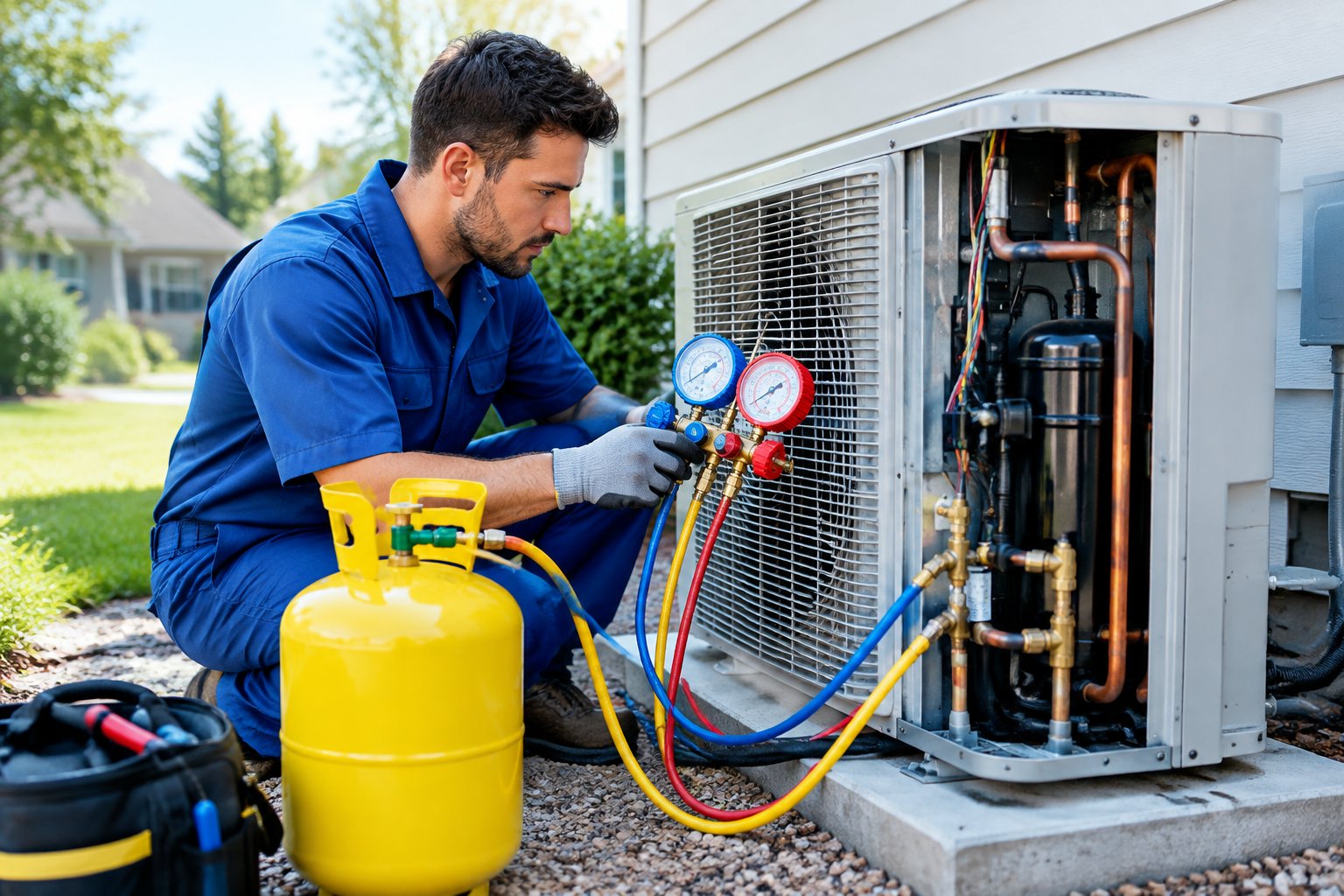
When Does Home Warranty Coverage Include Refrigerant?
Refrigerant coverage depends on your plan and service contract. Many home warranties treat refrigerant as a material used during an eligible repair on a covered air conditioning system, while some plans list air conditioning refrigerant itself as a covered item, often with a per-pound limit.
Either way, the technician's diagnosis matters. If a valve, coil, or fitting fails and refrigerant escapes, the leak repair and the recharge are part of the same job. Because low refrigerant almost always points to a leak, the cause of the loss is the first thing a technician should establish.
Every plan applies its own service fee, coverage limits, and exclusions. Those terms live in your service contract, and they decide how much refrigerant the plan pays for and under what conditions.
Eligible Mechanical Failures and Refrigerant Recharges
A typical covered recharge follows a diagnosis. The technician finds the breakdown, repairs the eligible component, then recharges the system so it can cool again.
Common failures that lead to refrigerant loss include a cracked service valve, a corroded coil, or a failed brazed joint on a line set. When the plan covers that component and the failure came from everyday use, the recharge that follows is part of finishing the job.
Refrigerant is sold and billed by the pound, which is why plans set a per-pound or total limit. A 3-ton system may hold six to eight pounds, so a full recharge adds up quickly.
Why a Refrigerant Top-Off Is Often Not Covered
A top-off with no leak diagnosis can be treated differently under some plans, because refrigerant does not get used up in a sealed system. A system that is low has a leak somewhere. Adding refrigerant without finding that leak treats the symptom.
Many warranty contracts are written around breakdowns rather than routine service, so adding a few pounds every spring without finding the leak can raise maintenance questions. How a recharge is handled depends on your plan and the current service contract.
There is a practical reason too. Refrigerant that escapes into the air is wasted money and an environmental problem, and handling it requires a licensed technician. Repeated top-offs on a leaking system just repeat the expense.
If your technician recommends a recharge with no leak repair, ask what caused the loss. That answer, along with your plan terms, shapes how the claim is handled.
Why a July Refrigerant Loss Needs Fast Attention in Las Vegas
Low refrigerant in July is a different problem than low refrigerant in March. When outdoor temperatures sit above 105 degrees, an undercharged system runs nearly nonstop and still loses ground indoors.
That constant run time puts strain on the compressor, the most expensive single part in the system. A low charge means the compressor loses some of the cooling it depends on, and heat builds where it should not.
Indoor heat becomes a safety issue as well. The Environmental Protection Agency (EPA) advises against relying on electric fans for cooling once a room reaches the mid-90s or higher, because fans move air without lowering temperature.
Knowing that speed matters raises the next question: what is happening inside the system when refrigerant escapes?
What a Refrigerant Leak Means for Your HVAC System
A refrigerant leak means your sealed cooling loop has an opening, and the system will keep losing charge until someone finds and fixes it. Cooling capacity drops first. Component damage follows if the leak is ignored.
Your heating, ventilation, and air conditioning (HVAC) system moves heat rather than creating cold. Refrigerant is the substance that carries that heat from inside your house to the outdoor unit.
Heat pumps work the same way and reverse the cycle for heating, so a leak affects both seasons on those systems.
How the Compressor, Coils, and Refrigerant Work Together
The compressor pressurizes refrigerant and pushes it through the loop. The condenser coil outside releases heat into the air. The evaporator coil inside absorbs heat from your home.
Refrigerant changes from liquid to gas and back as it circles that loop. That phase change is what moves heat. The charge level has to be correct for the cycle to work.
When the charge drops, pressures fall out of range. The evaporator coil can get cold enough to freeze, and the compressor can overheat from poor cooling and lubrication return.
Common Signs of a Refrigerant Leak
Refrigerant leaks announce themselves in fairly consistent ways. Watch for these:
- Air from the vents feels cool but never cold, even with long run times
- Ice on the indoor coil or on the copper line running to the outdoor unit
- A hissing or bubbling sound near the indoor unit or line set
- Electric bills climbing while comfort drops
- The system runs all afternoon and still misses the thermostat setting
Two or more of those together point strongly toward charge loss. One alone can also come from a dirty filter or a failing blower.
Why Leak Detection Comes Before a Recharge
A technician should locate the leak before adding refrigerant. Common methods include electronic leak detectors, soap bubble testing at joints, and ultraviolet dye run through the system.
Skipping detection means the new charge escapes at the same rate as the old one. On a slow leak that might take a season. On a coil leak it can take days.
Leak detection also determines whether the repair is worth doing. A pinhole in a line set is a straightforward fix. A leaking evaporator coil on a 15-year-old system is a much bigger conversation.
Refrigerant handling must be performed by an appropriately certified technician, which is one reason refrigerant work is never a do-it-yourself project.
Those technical realities shape what a warranty will and will not approve on a given claim.
What Can Limit an AC Refrigerant Claim?
Four things limit most refrigerant claims: plan limits, pre-existing loss, missing maintenance, and damage from something other than normal use. Knowing them ahead of time keeps a claim from stalling.
None of these are unusual. They appear in service contracts across the industry because they separate wear and tear from other causes.
Coverage Limits, Service Fees, and Plan Terms
Every claim starts with a service fee paid per trade when you submit a service request. On the Essential, Enhanced, and Premium plans, that deductible is either $100 or $125 depending on the plan you choose.
Refrigerant limits are then applied on top. A plan may cap what it pays per pound or per claim, and the contract spells out that number.
Coverage must also be active. A system that is already losing charge before coverage starts is a different situation from one that fails months into the term.
Pre-Existing Conditions and Existing Refrigerant Loss
A leak that existed before your coverage started is a pre-existing condition. Warranty plans cover breakdowns that happen during the coverage term, not problems already in progress.
This is why buying a plan while a technician is standing in your yard does not solve today's repair. It protects you against the next failure.
If you already hold a plan and notice weak cooling, file the claim right away. Waiting while the system runs low can turn a repairable leak into compressor damage.
Lack of Maintenance, Rust, Corrosion, and Improper Installation
Service contracts exclude failures caused by neglect, and refrigerant claims are no exception. A coil packed with dust that overheats and fails is treated differently than a coil that wore out.
Other common exclusions in this category include rust and corrosion, power surge damage, and improper installation or modification. Some plan tiers restore parts of that list, which the next section covers.
You do not need to hand over a maintenance file to buy a plan. Maintenance records are not required to purchase coverage, and breakdowns are evaluated against the contract terms.
Still, keeping filter changes and tune-up receipts helps. So does having your model and serial numbers ready.
How to File a Warranty Claim and Prepare for the Technician
Filing is straightforward. Submit the service request online or by phone, pay the trade call fee through the secure link you receive, and the claim gets dispatched to a vetted contractor.
You will get an email with your assigned vendor's name and number, and that provider contacts you within two to three hours to schedule.
Before the visit, gather a few things:
- The model and serial numbers from the outdoor unit's data plate
- When you first noticed weak cooling and whether it came on suddenly
- Any ice you have seen on the lines or indoor coil
- Recent tune-up or filter change dates
Have that ready and the diagnosis goes faster. Which plan you carry then decides how much of the refrigerant bill lands on you.
How Plan Tiers Change Refrigerant Protection
Refrigerant is where plan tiers separate most clearly. The Essential plan sets a per-pound cap that carries into Enhanced, while Premium removes the refrigerant cap entirely for eligible breakdowns.
For a Las Vegas home with a larger system, that gap is the difference between covering part of a recharge and covering all of it.
Essential: Limited Air-Conditioning Refrigerant Coverage
The Essential plan covers air conditioning refrigerant up to $25 per pound. It also includes heating and cooling systems, plumbing, the electrical system, water heater, and major kitchen appliances.
That per-pound structure works well for a small recharge tied to a covered repair. On a larger system needing a full charge, the cap becomes the ceiling on what the plan pays.
Essential also includes one Tel-e-tech video troubleshooting session per month, which can confirm whether the problem needs a truck roll.
Enhanced: Essential Refrigerant Coverage Plus Broader Protection
Enhanced builds on everything in Essential and adds coverage for situations other plans often deny. That includes mismatched systems, improper installation or modification, and permits and code violations.
For HVAC owners, mismatched system coverage carries real weight. A condenser replaced without the matching indoor coil is common in older Las Vegas homes, and that mismatch can otherwise void a claim.
Enhanced also adds unlimited Tel-e-tech plus appliance coverage for the clothes washer, dryer, and kitchen refrigerator. Because Enhanced includes everything in Essential, it carries the same air conditioning refrigerant coverage of up to $25 per pound, subject to the current service contract.
Premium: Unlimited Refrigerant for Eligible Breakdowns
Premium includes unlimited air conditioning refrigerant. There is no per-pound cap on eligible breakdowns, subject to the plan's service fee, exclusions, and current service contract.
Premium also adds portable air conditioning delivery and setup with a limit of two, which matters when a repair needs parts during a 110-degree week. Premium customers may qualify for service within 24 hours on plumbing and HVAC claims.
One more piece: Premium waives the trade call fee for one eligible maintenance or tune-up visit per year. A spring tune-up catches a small leak before August does.
What to Compare Beyond Refrigerant Coverage
Refrigerant is one line item. When you compare tiers, weigh these too:
- Whether heating systems, thermostats, and the electrical system are included
- How mismatched systems and prior installation work are handled
- Whether ductwork is available as an add-on for your home
- Response time commitments on HVAC claims
- Appliance coverage you would otherwise pay for separately
Homeowners comparing full system and appliance coverage usually find the tier decision comes down to how old their equipment is.
Choose Coverage Before the Next AC Breakdown
Refrigerant coverage comes down to your plan terms and what the technician finds. Low refrigerant usually means a leak, so diagnosis comes first, and the leak repair and recharge are then handled under your plan's service fee, limits, and exclusions.
The tier you carry decides the rest. Essential caps refrigerant at $25 per pound, Enhanced keeps that refrigerant coverage and adds protection for mismatched and previously modified systems, and Premium removes the refrigerant cap for eligible breakdowns. In a valley where air conditioners run five months straight, that cap is worth thinking about before summer, not during it.
Ready to see which tier fits your home? Compare home warranty plans from Dwellness, a company that has served Las Vegas homeowners since 1986 and approves 97% of claims. Call (702) 509-7007 for a free quote, reach existing-customer support at (702) 641-8888, or send your questions through the contact page. Coverage across Nevada starts with verifying your address.