
It is a Saturday in late October, the mornings have finally dropped into the 50s, and you are standing in front of the furnace closet with a new filter in one hand and a vague feeling that you should be doing more than this. You should, but not much more, and most of it takes less than an hour. This furnace maintenance checklist is split into two lists: the things a homeowner can safely do before the first cold night, and the things a technician does at the annual tune up. Knowing which is which keeps you from skipping the first list and from attempting the second.
Las Vegas gives furnaces an unusual year. The burners rest from March to November while the blower runs the air conditioning through a long, dusty summer. So by the time heating season arrives, the gas side is clean but neglected and the air side is tired and dirty, and the checklist below is written with that in mind.
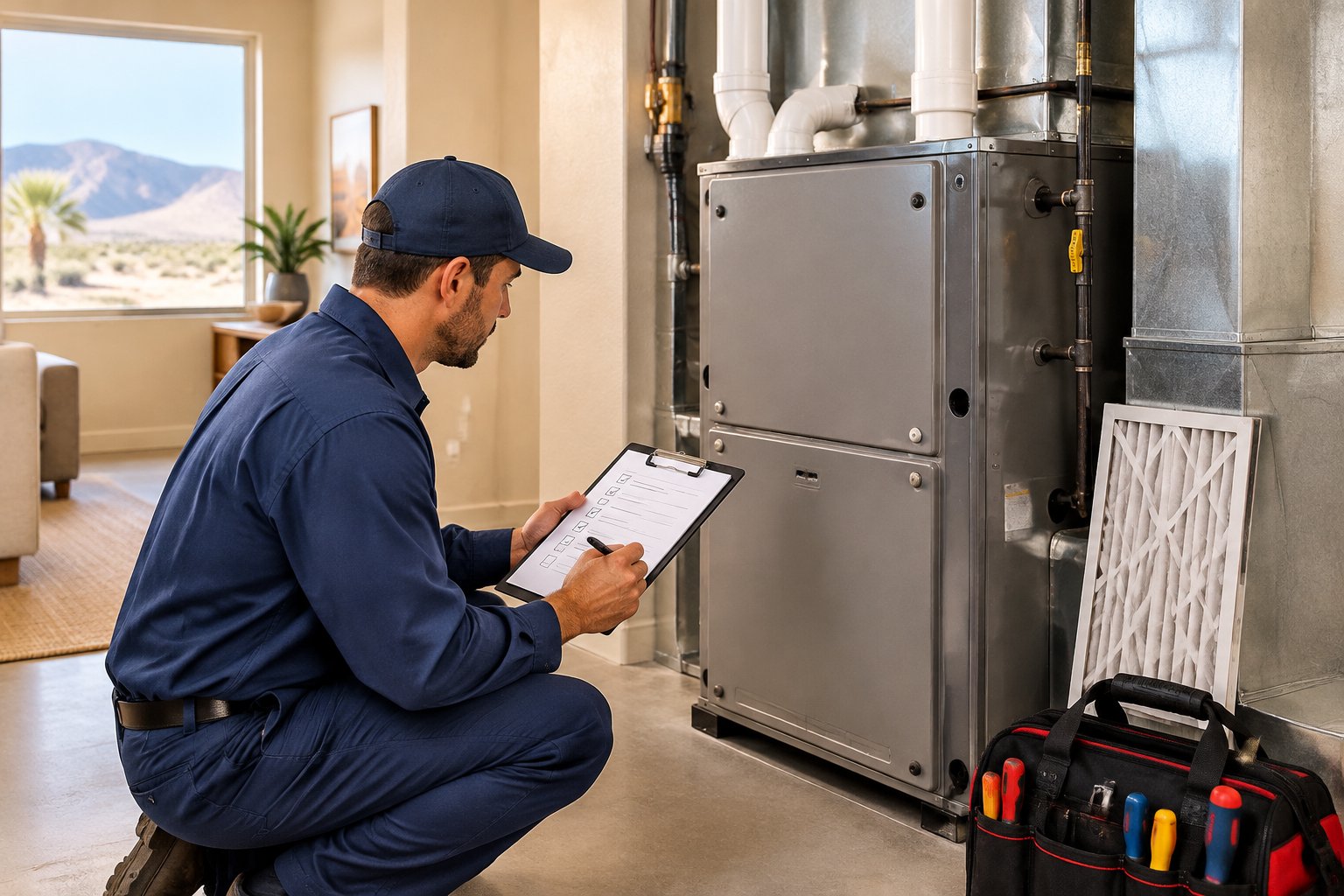
The homeowner list: one afternoon in October
Work through these before you actually need the heat. A problem found on a mild afternoon is a scheduled repair; the same problem found on a 38 degree night is an emergency.
Replace the filter. After a Las Vegas summer the filter has been working for months and is usually gray and loaded. Switch the furnace off at its power switch first, note the size printed on the frame, buy the same, and check the airflow arrow points toward the furnace. Then put a reminder in your phone to check it monthly through winter; the dust here does not take the season off.
Put fresh batteries in the thermostat, even if it is wired. A thermostat that drops out on a cold night is an easy thing to prevent. While you are there, switch it to Heat, raise the setpoint, and confirm the furnace actually starts and warms the vents within a few minutes.
Run the furnace for a full cycle with the windows open. The first run of the season burns the summer's dust off the heat exchanger, and the smell is normal for the first hour. Doing it now means the smell happens on a day you chose, and if anything else is wrong, you find out early.
Clear the space around the furnace. Three feet of open floor, nothing leaning on the cabinet, nothing stored against the flue pipe, and no boxes blocking the louvered door or the grille that lets combustion air into the closet. In garages, move paint, pool chemicals and gasoline well away; their fumes corrode burners and heat exchangers.
Walk every room and open every supply register and return grille. Pull the couch off the return. Vacuum the grilles. Closed vents do not save energy on a central system; they raise the pressure in the ducts and make the furnace run hotter.
Check the flue termination outside, from the ground. Find where the metal flue or the white PVC vent pipes exit the roof or wall and look, with binoculars if the roof is steep, for a missing cap, a bird's nest, or in the case of PVC pipes, a screen clogged with leaves and a pipe that has sagged. A blocked vent stops the furnace from lighting and is also a carbon monoxide risk. If clearing it means getting on the roof, leave that to the technician.
Test the carbon monoxide alarms. Press the button on each one, replace batteries, and if any alarm is more than seven years old or has no date on the back, replace the unit. One near the bedrooms and one on each level of the home is the usual layout.
On a high efficiency furnace, look at the condensate drain. These furnaces produce water when they run, and it leaves through a small plastic line to a drain or a pump. Make sure the line is connected, not kinked, and not sitting in a puddle. A clogged line trips a safety switch and shuts the furnace down.
Listen and look during that first cycle. A rattle that was not there last year, a blower that takes a long time to start, a flame that is yellow instead of blue through the viewing window, or a furnace that lights and shuts off repeatedly are all notes for the technician, and the post on signs you need HVAC repair explains which of them cannot wait.
The technician list: what a real tune up includes
A furnace tune up is not a filter change and a thumbs up. If the visit is over in ten minutes, it was not a tune up. This is what a thorough annual service covers, and it is a useful list to have in hand when the technician arrives.
Inspect the heat exchanger. This is the reason the visit exists. A technician looks for cracks, rust and corrosion in the metal that separates the flame from the air you breathe, often with a camera or a mirror, and sometimes with a combustion analyzer that detects gases where they should not be. The Consumer Product Safety Commission urges a yearly professional inspection of every fuel-burning heating system, including the flue and vents, for exactly this reason (cpsc.gov).
Clean the burners and the flame sensor. Dust and rust on the burners make the flame lazy and yellow; a thin film of oxidation on the flame sensor is the single most common reason a furnace lights and shuts off three seconds later. Both are a few minutes of work with the gas off.
Check the igniter. A hot surface igniter develops hairline cracks with age, and a technician can measure its resistance and tell you whether it is likely to survive the winter.
Test every safety control. The high limit switch, the rollout switches, the pressure switch and the door switch each have one job, which is shutting the furnace down when something is wrong, and each gets tested rather than assumed.
Measure gas pressure and check the gas valve. Gas pressure that is too high or too low changes how the burners fire and how hot the exchanger runs. The technician also checks the gas connections for leaks.
Inspect the venting. The inducer motor, the pressure switch hose, the flue pipe and its joints, and the condensate trap on a high efficiency unit all get checked for blockages and leaks.
Clean and inspect the blower. After a summer of cooling, the blower wheel in a Las Vegas furnace is often coated with dust that unbalances it and cuts airflow. The technician cleans it, checks the motor's amp draw against its rating, and tests the run capacitor, which is one of the most common summer failures.
Tighten electrical connections and check the control board. Loose connections arc and overheat, and a board with a history of fault codes is worth knowing about before January.
Measure temperature rise. With the furnace running, the technician compares the temperature of the air going in with the air coming out and checks it against the range on the data plate. A rise that is too high means airflow is restricted; too low points to a burner or gas problem.
Check the thermostat and the cycle. The technician confirms the thermostat calls for heat correctly, the furnace runs through its full sequence, and it shuts down cleanly.
When to do each list, and what to do monthly
October, before the first cold night: the homeowner list, start to finish. Fall is also the right time for the technician visit, since it catches anything the summer did to the blower before the furnace has to work. If you can only book one professional visit a year for the whole system, spring is the better choice in Las Vegas because of the air conditioning load, and the AC maintenance checklist covers that side. A fall visit is the second best, and ideally you have both.
Monthly through the heating season: hold the filter up to a light and replace it if you cannot see through it. Glance at the flame through the viewing window. Listen on the first cycle of the day for anything new.
End of February, when the heat shuts off for the year: change the filter again, because the blower is about to start its real work. The home maintenance calendar puts these dates alongside everything else the house needs, and the fall home maintenance checklist covers the rest of the house in the same October afternoon.
What maintenance does for a home warranty claim
A home warranty covers breakdowns from normal wear and tear, and maintenance is what keeps a breakdown in that category. A blower motor that failed after years of summer duty is wear and tear. A heat exchanger that cracked because the furnace ran for three winters on a filter that was never changed is a harder conversation, since neglect is one of the things a service contract can exclude. The homeowner list above is, in part, how you keep the furnace on the right side of that line.
With Dwellness, no maintenance records are required to buy a plan, so a furnace you inherited with the house is eligible on the same terms as one you have serviced every year. Heating is covered in every plan, and every plan includes an HVAC maintenance plan, which is the simplest way to make sure the technician list actually happens each year. If the fall check turns up a real failure, report it through the Dwellness site whenever you notice it, or by phone to (702) 641-8888, and a licensed local contractor is assigned to the job. The heating home warranty page lists the covered heating breakdowns, and the exclusions are spelled out so there are no surprises in January.
A furnace in this valley asks for very little: a clean filter, clear air, a test run in October and a professional set of eyes once a year. Give it those and it will start on the first cold night and most nights after. For the failures that come anyway, having heating coverage in place turns a cold morning into a phone call. Request a free quote at dwellness.house before the season starts, or call (702) 509-7007 and the Dwellness team will walk you through the plans.