
The furnace kicks on for the first time since March, and within a minute the whole house smells like something is on fire. You check the kitchen. You check the dryer. Then you realize the smell is coming out of every vent at once. A burning smell from heater vents on the first cold night of a Las Vegas winter is so common that most HVAC technicians can predict the week the calls will start. Most of the time it is harmless. Some of the time it is the earliest warning you will get of a real problem, and the way to tell the difference is to name the smell.
Burning dust, hot wiring, melting plastic, scorched metal, oil and gas each smell different, and each one calls for a different response. Here is how to tell them apart and what to do in the first five minutes.
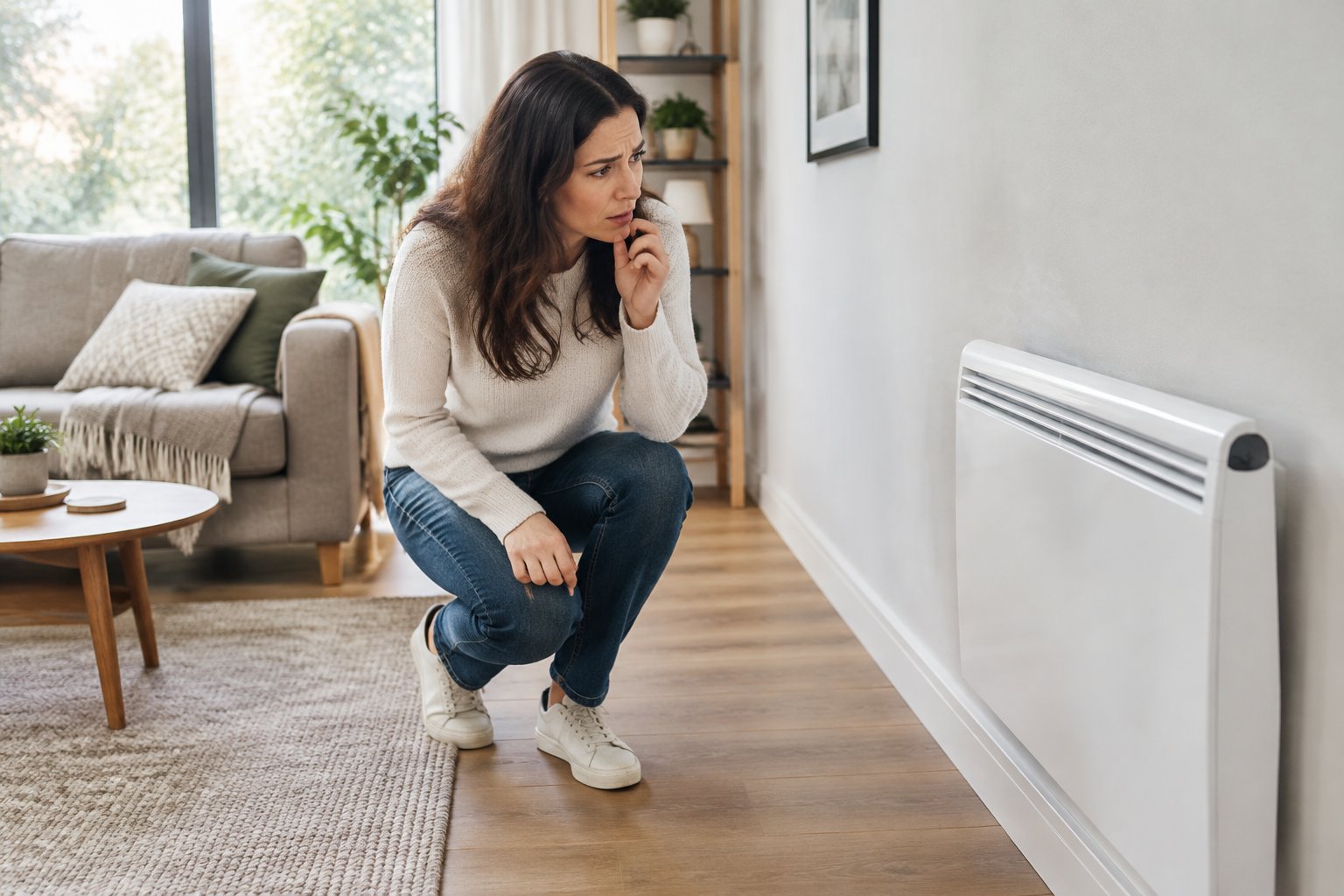
The dusty smell on the first cold night fades within an hour
This is the one almost everyone is smelling. The furnace has sat idle through eight months of cooling season, and in this valley that means a fine layer of dust has settled on the burners, the heat exchanger and the inside of the cabinet. The first time the burners light, that dust scorches off, and the blower sends the smell through the house. It smells like a hot iron on a dusty shelf, dry and slightly toasty, and it is strongest in the first ten minutes.
Open a couple of windows, leave the heat running, and it should be gone within an hour. If you want to skip it next year, run the furnace for a short cycle on a mild afternoon in October with the windows open, before you need it. Changing the filter at the end of summer helps too, since a loaded filter adds its own burnt-dust note to the mix.
The dust smell has two limits. It should not come back on the second day, and it should not get stronger the longer the furnace runs. If either of those happens, you are smelling something else.
A hot electrical smell means power off, then a phone call
Overheated wiring has a sharp, acrid smell that most people describe as hot plastic or a hair dryer left on too long. Some electrical failures smell fishy or like urine, which sounds strange until you have been near a burning capacitor or an overheated wire connector. Either way, it does not fade. It tends to get stronger while the blower runs and may come with a hum or a buzz from the furnace cabinet.
The likely sources are a blower motor that is overheating, a capacitor failing, a connection on the control board that has worked loose and is arcing, or wiring insulation that has rubbed through against the cabinet. All of these can go from smell to smoke.
Turn the furnace off at the switch on or next to the unit, or at the breaker, and leave it off. This is not a wait-and-see smell. Electrical faults inside a furnace are a technician's job, and running the unit to "see if it clears" is how a motor failure turns into a fire call.
Burning plastic or rubber usually means something is melting or something fell in
A smell like burning plastic, rubber or a crayon on a radiator has two common explanations. The first is a foreign object. A toy, a plastic bag or a piece of packaging gets pulled against a floor register or dropped down a supply duct, and the first warm cycle melts it. Walk the house and look at each register for anything stuck to the grille, and check that nothing is sitting on top of the furnace cabinet or against the flue pipe.
The second explanation is a component inside the furnace that is melting: the blower motor's wiring, the belt on an older belt-drive furnace, or a plastic part on the blower wheel. That smell is strongest right at the furnace, often with a visible wisp of smoke when you open the blower door, and it means power off and a service call.
If you find and remove an object and the smell fades on the next cycle, you are done. If you cannot find anything, treat it as the second kind.
Gunpowder and scorched metal smells come from a failed board or motor
A sudden, sharp smell like a fired cap gun or scorched metal, sometimes paired with a pop, is the signature of a circuit board or fan motor that has shorted out. The furnace will often stop at the same moment or begin behaving strangely, with the blower running continuously or not at all. There is nothing to troubleshoot here. Shut it off at the switch and call for service. Keep the breaker off until a technician has looked, because a shorted board can keep drawing current.
An oily or chemical smell can point to the heat exchanger
This is the smell to take most seriously, even though it is often the faintest. A furnace running normally should not smell like oil, formaldehyde or chemicals. When it does, one possibility is a cracked heat exchanger letting combustion byproducts mix with the air the blower is pushing into the house. A cracked exchanger does not always produce an obvious smell, which is why carbon monoxide alarms matter, but when it does, people describe it as oily, sweet or like a chemistry set.
If you notice a smell like that, or anyone at home has a headache, dizziness or nausea that improves outside, or a CO alarm sounds, get everyone out of the house and call 911 from outside. Do not go back in to turn the furnace off. The Consumer Product Safety Commission notes that heating equipment is among the top contributors to carbon monoxide deaths and urges a yearly professional inspection of every fuel-burning heating system, including the flue and vents (cpsc.gov). An annual check is the only way a cracked exchanger gets caught before it produces symptoms.
Rotten eggs is gas, and that one means leave the house
Natural gas is odorless, so the utility adds a compound that smells like rotten eggs or sulfur. A brief, faint whiff right at the burner in the second the main burners light is the only version that is ever normal, and even that deserves a mention at the next service. Anything stronger, anything anywhere else in the house, or a smell that persists after the furnace is running, is a gas leak until proven otherwise.
Do not flip any switch, including the furnace switch or a light switch. Do not relight anything. Leave the house, leave the door open behind you, and call Southwest Gas or 911 from a neighbor's house or from your phone outside. A gas smell is the one case where turning the furnace off at the breaker is the wrong move, because a switch can make a spark.
Cutting power to the heater without making things worse
For every smell above except gas, the right first move is to cut power. Most furnaces have a light switch mounted on or beside the cabinet that kills power to the unit. If you cannot find it, use the breaker labeled furnace, heat or air handler in the panel. Set the thermostat to Off as well, so nothing calls for heat when power is restored. If the smell was electrical, leave the breaker off until the technician arrives, even if the smell clears.
Then open windows. Smoke and combustion smells travel through the whole duct system and linger in soft furnishings for a day, and fresh air is the quickest way to tell whether a smell is fading or returning.
Where a home warranty fits when the smell is a failed part
A dust smell is maintenance. A gas leak belongs to the utility. Everything in between, a blower motor overheating, a capacitor giving up, a control board shorting, a heat exchanger that has cracked after years of service, is a mechanical or electrical failure from normal wear and tear, and that is the category a home warranty covers.
Heating is part of every Dwellness plan, from the Essential Plan up. A furnace that quits gets reported the same way at 2 a.m. as at 2 p.m.: a service request on the Dwellness site, or a call to (702) 641-8888, and a licensed local contractor is assigned to find the fault. Dwellness has handled breakdowns for Las Vegas homeowners since 1986 and approves 97 percent of claims. Each plan also includes an HVAC maintenance plan, which is the practical answer to how a heat exchanger problem gets caught early. Details are on the heating home warranty page, and the post on whether a home warranty covers a furnace covers the exclusions, such as damage from an unlicensed repair.
If the burning smell came with other changes, louder operation, longer run times, rooms that never warm, the post on signs you need HVAC repair is worth a read. And the fall home maintenance checklist includes the October test run that turns the first-cold-night smell into a non-event.
A furnace that smells for an hour on the first cold night is normal. A furnace that smells like wiring, plastic, gunpowder, oil or gas is telling you to stop, and the responses above are in order of how fast you need to act. For the repairs that follow, having heating coverage already in place means the next step is a service request rather than a search. Request a free quote at dwellness.house whenever it suits you, or call (702) 509-7007 and a real person in Las Vegas will walk you through the plans.