
You hold your hand over the hallway register at six in the morning and the air coming out is cold. Not cool, cold, as if the fan were pulling straight from the garage. A heater blowing cold air is one of the most common winter complaints in Las Vegas, and it is also one of the easiest to misread, because three different problems produce the same first impression. The difference is in the timing. Cold for a minute and then warm, cold the entire time, or lukewarm that never gets there, each points somewhere different, and sorting that out takes about ten minutes with your hand at the vent.
So before you call anyone, stand at a register, turn the thermostat up several degrees, and pay attention to what the air does over the next ten minutes.
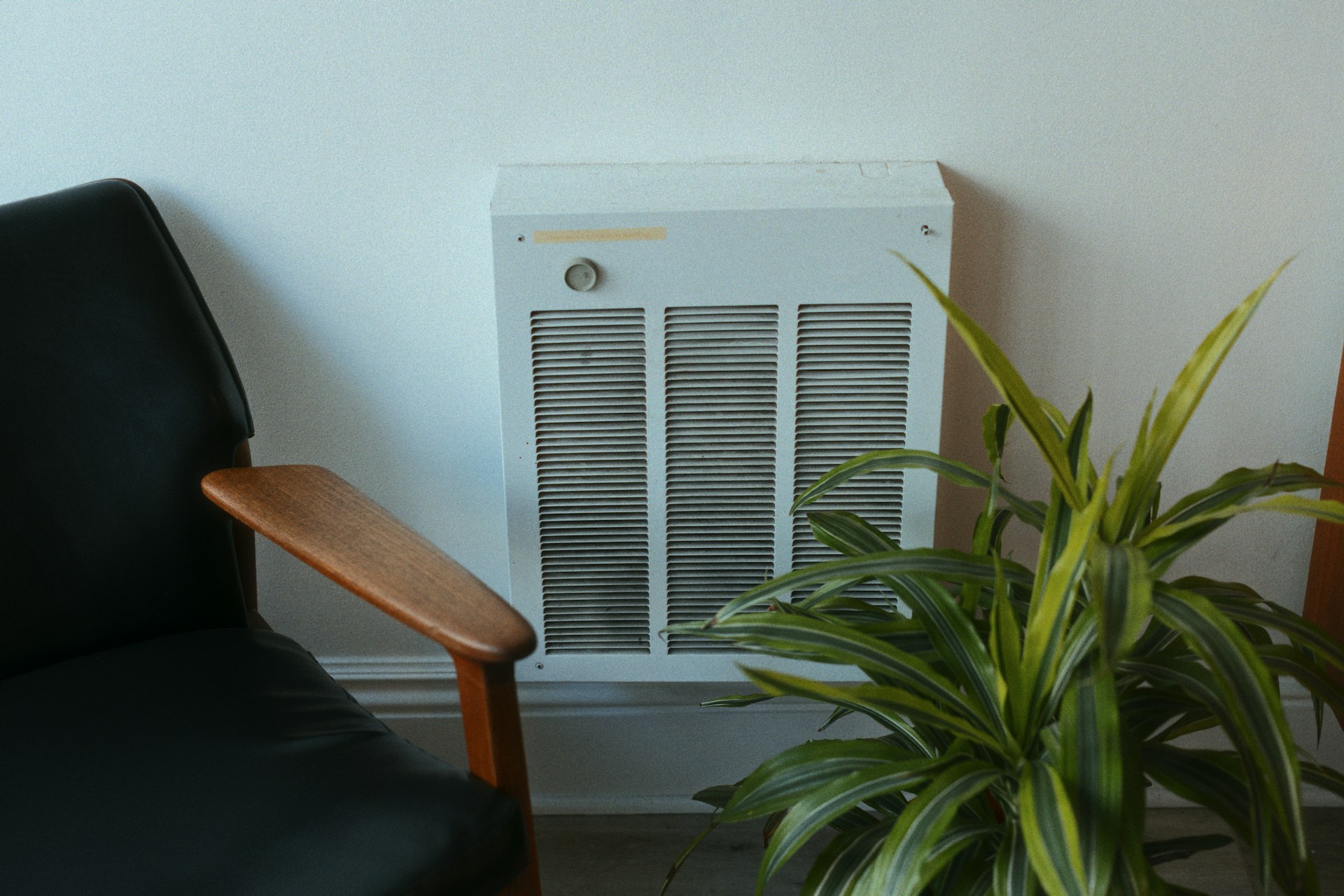
Cold air for the first minute is the furnace doing its job
Most gas furnaces start the blower a short time after the burners light. For the first 30 to 90 seconds the ducts are full of the air that was sitting in them overnight, and in a Las Vegas attic in December that air can be genuinely cold. The fan pushes it out ahead of the heated air. If the vent goes from cold to warm within a couple of minutes and stays warm, there is nothing wrong.
The same thing happens at the end of each cycle. The burners shut off first and the blower keeps running for a minute to pull the remaining heat out of the heat exchanger, so the last bit of air on every cycle feels cooler. That is a design feature, not a fault.
Where this gets confusing is a furnace that is short cycling: lighting, running two or three minutes, shutting down, then starting again. Each restart brings another blast of cold duct air, so the house never feels properly warm even though the furnace is technically working. Short cycling usually comes back to a dirty filter or an overheating limit switch, and it is covered further down.
Cold air the entire time means the burners are not lighting
If the blower runs and runs and the air never warms, the furnace is moving air but not heating it. On a gas furnace, that means the burners are not lighting or are not staying lit.
Start with the thermostat. Confirm it is on Heat and the fan is set to Auto, not On. With the fan on On, the blower runs around the clock whether the burners are lit or not, and between heating cycles it blows room-temperature air that feels cold on your skin. This single setting accounts for a surprising share of "furnace blowing cold air" calls, and the fix takes a second.
Next, go to the furnace and listen for the start sequence. You should hear a small fan spin up (the inducer), then a click, then the soft roar of burners lighting, and only then the main blower. If you hear the blower and nothing else, the furnace has given up before ignition. The usual reasons are an igniter that has cracked or burned out, a flame sensor coated with oxidation so the gas valve closes within seconds of lighting, a pressure switch refusing to close because the vent is blocked, or on older furnaces a pilot light that has gone out. Some furnaces try three times and then lock out with the blower still running, which is exactly the "cold air forever" symptom.
A pilot that is out can be relit by following the label on the furnace, turning the gas control to Off first and waiting at least five minutes for any gas to clear. Everything else in that list sits next to the gas valve and the burners and is a technician's job. If you smell gas at any point, stop, leave the house, and call Southwest Gas or 911 from outside.
Lukewarm air that never gets hot is usually an airflow problem
The third pattern is the sneaky one. The air at the vent is warmer than the room but not by much, the furnace runs for long stretches, and rooms at the far end of the house never catch up.
Pull the filter first. A filter packed with a summer's worth of Las Vegas dust chokes the airflow across the heat exchanger. The furnace responds by overheating, the high limit switch cuts the burners, and the blower keeps running to cool things down. Burners off, blower on, lukewarm air. When the exchanger cools, the burners relight, and the cycle repeats. A filter you cannot see light through is enough to cause this on its own.
If the filter is clean, think about the ducts. In the valley most ductwork runs through the attic, and a disconnected joint or a split in the flex duct up there dumps heated air into the attic and pulls attic air in. The vents nearest the furnace feel fine; the bedroom at the end of the run feels like nothing is on. A duct problem is a repair, not a furnace fault, and a technician can find it by comparing the temperature at the supply plenum against the far vents. Closed or blocked registers, a return grille with a couch pushed against it, and a blower motor losing speed produce the same lukewarm result.
One more cause worth knowing about: a high efficiency furnace has a condensate drain, and a blocked drain trips a safety switch that shuts the burners down while the blower may keep going. If you see water around the base of the furnace, that is the likely story.
A heat pump blowing cold air in winter plays by different rules
A fair number of Las Vegas homes, especially newer builds and homes without a gas line, heat with a heat pump rather than a furnace. If your outdoor unit runs in winter and there is no flame anywhere, that is what you have, and "cold" needs a different definition.
A heat pump does not make air hot the way a burner does. It moves heat from outside to inside, and the supply air is typically somewhere in the 85 to 95 degree range, well below body temperature. Air at 90 degrees coming out of a vent feels lukewarm or even cool to a hand that is 98 degrees, even though it is warming the house. If the house is holding the setpoint, the heat pump is fine.
Then there is defrost. On a cold, damp morning, frost forms on the outdoor coil, and the system reverses itself for a few minutes to melt it. During that time the indoor unit can blow air that is actually cool, and you may see steam rising off the outdoor unit. Desert winters are dry, so this happens less here than in wetter climates, but on the handful of mornings when it is in the 30s with moisture in the air, a few minutes of cool air at the vent is the defrost cycle, not a breakdown. Most systems bring on the electric backup heat strips during defrost to take the edge off.
When a heat pump blows cold air and the house keeps getting colder, the causes are low refrigerant, a stuck reversing valve, a failed outdoor fan or compressor, or a unit sitting in a defrost loop it cannot finish. None of those are homeowner fixes. Refrigerant work in particular requires a licensed technician.
The signs that mean stop troubleshooting and call
Cold air on its own is not dangerous. A few things that come with it are.
A furnace that lights and then shuts down repeatedly can be venting badly, and a carbon monoxide alarm is the only reliable way to know. If an alarm sounds, or anyone at home has a headache or nausea that eases outdoors, get everyone out and call 911. The Consumer Product Safety Commission urges a yearly professional inspection of all fuel-burning heating systems for exactly this reason (cpsc.gov).
A breaker that trips again after one reset, a burning smell that does not fade within the first hour of the season, and any gas smell are also stop signs. So is a heat pump outdoor unit encased in ice. Resetting things repeatedly does not fix any of these and can make the eventual repair bigger.
Where a home warranty picks up the repair
By the time you have checked the fan setting, the filter and the breaker, what is left is a failed part. Igniters, flame sensors, pressure switches, limit switches, blower motors, control boards, reversing valves and compressors all wear out, and wear and tear breakdowns are what a home warranty exists to cover.
The Essential Plan from Dwellness covers heating systems and cooling systems, which means a heat pump is covered as the one unit that does both. You file a service request online whenever the problem shows up, or call (702) 641-8888, and a licensed local contractor is dispatched to diagnose the breakdown. Because there is no requirement to show maintenance records when you buy a plan, a furnace you inherited with the house is eligible on the same terms as one you have looked after for a decade, though a fault that existed before coverage began may be excluded as a pre-existing condition. What the plan does not cover is the dirty filter, the thermostat set to On, or a duct that a previous owner's remodel left disconnected, so those checks are worth doing before the technician arrives.
The heating home warranty page lists what counts as a covered heating breakdown, and the post on whether a home warranty covers a furnace explains the usual exclusions. If the furnace has been showing other symptoms for a while, the post on signs you need HVAC repair helps you decide whether this is a one-off or the start of a pattern.
Most cold-air mornings in this valley end at the thermostat or the filter. The ones that do not are mechanical failures of a system that works hard eleven months a year, and the sensible move is to have the repair covered before the first cold night rather than after it. You can request a free quote at dwellness.house in a couple of minutes, or call (702) 509-7007 and talk it through.