
Your phone has been plugged in beside the bed all night and it is still at 12 percent. You wiggle the charger, try the other socket in the same plate, and get nothing. An outlet not working is one of the most common electrical complaints in any house, and in the majority of cases the fix takes less than five minutes and involves pressing one button. The rest of the time it is telling you something about the wiring behind the wall, and that is where you need to stop and let a licensed electrician take over. The order below moves from the harmless checks to the ones that matter, and it tells you where the line is.
One rule before anything else: you will never need to remove an outlet cover, pull a receptacle out of the wall, or open the breaker panel beyond its door for any step in this article. If a step seems to require that, it is an electrician’s step.
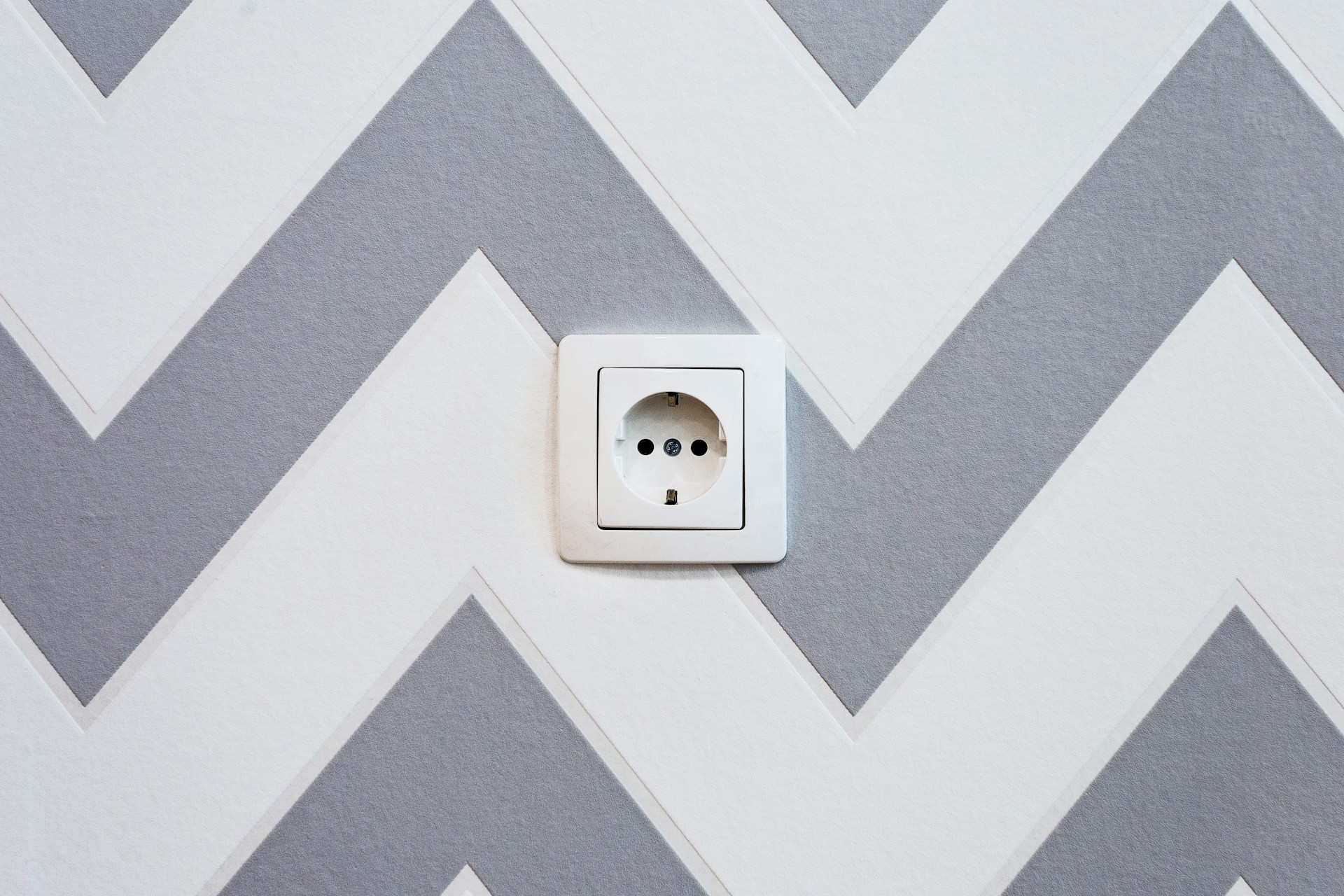
Rule out the thing you plugged in
Take the charger, lamp or appliance to an outlet you know works. If it is dead there too, the outlet was never the problem. Phone charging bricks fail constantly, lamp sockets corrode, and a power strip with a tripped internal breaker looks exactly like a dead outlet. Also check that the device is not on a switch-controlled plug on its own cord.
If the device works elsewhere, come back to the dead outlet and try something simple and known-good in it, like a small lamp, so you are testing the outlet and nothing else.
Count how many outlets are dead
Before you go hunting, walk the room and the nearest rooms with the lamp. One dead outlet with everything around it live points to that receptacle itself. Several dead outlets along one wall, or in one bathroom, or the whole garage, point to a shared circuit, which means either a GFCI upstream or a breaker.
This step saves you a lot of time, because the two shared-circuit causes have two very specific fixes and neither involves the outlet you first noticed.
Find and reset the GFCI, which may be in another room
A GFCI is the outlet with the two small buttons marked Test and Reset. Its job is to cut power in a fraction of a second when it senses current leaking somewhere it should not be. The Consumer Product Safety Commission describes it as a device that "constantly monitors current flowing through a circuit" and trips when the outgoing and returning current differ by as little as 0.006 amperes, fast enough to act "before the electricity can affect your heartbeat" (cpsc.gov).
The part people miss is that one GFCI usually protects several ordinary outlets downstream of it. The dead outlet on your patio may be protected by a GFCI in the garage. A dead bathroom outlet is often fed by the GFCI in the other bathroom. Kitchen counter outlets, bathrooms, garages, laundry areas, outdoor outlets and anything near the pool are the places to look. Press Reset firmly until it clicks. If the lamp comes back on, you are done.
If the GFCI will not reset, or trips again immediately, unplug everything on that circuit and try once more. A worn extension cord, a pool pump with a failing motor, a patio fridge or an outdoor outlet that has taken on moisture after a monsoon storm will all trip a GFCI and keep tripping it. If it still will not hold with nothing plugged in, the GFCI itself may have failed, which is common for outdoor units after a few Las Vegas summers of sun and dust. That is a replacement job for an electrician. The CPSC also recommends pressing Test on every GFCI once a month and confirming power drops, which is the easiest electrical check you will ever do.
Look at the breaker panel without touching anything but the switches
Open the panel door and look at the row of breakers. A tripped breaker usually sits in a middle position between On and Off, and may feel loose. Some have a small red or orange flag in a window. Push it fully to Off, then firmly back to On. That is the entire extent of what to do inside the panel; the cover stays on and your hands stay on the switch handles.
If the breaker holds, go check the outlet. If it trips again right away, or trips again within a few minutes with nothing plugged in, leave it off and call. A breaker that will not stay on is protecting you from a fault in the wiring or a device on the circuit, and it should not be forced. The post on why a circuit breaker keeps tripping walks through what those repeat trips usually mean.
Older panels sometimes have breakers that trip without moving visibly. If nothing looks tripped and the circuit is clearly dead, switch each breaker in the suspected area fully Off and back On once. If that brings the outlet back, note which breaker it was and mention it when you call, because a breaker that trips silently is often a breaker on its way out.
Check whether half the outlet is on a wall switch
In a lot of homes, especially bedrooms and living rooms built without a ceiling light, one socket of an outlet is wired to a wall switch so a lamp can be turned on at the door. These are called half-hot or switched outlets. If one socket of a pair is dead and the other works, go flip every wall switch in the room that does not appear to do anything. You may find the "broken" outlet was simply switched off.
The signs the receptacle itself has failed, and what to do about them
If everything shared is live and one outlet is still dead, the receptacle or the connections behind it are the problem. Receptacles are mechanical parts. The spring contacts inside loosen after years of plugs going in and out, the plastic gets brittle in the heat, and the connections on the back work loose. Look and listen for these.
Plugs fall out or sit loose. The contacts have worn and are no longer gripping, which also means they are no longer making good electrical contact. Loose contacts heat up.
The cover plate is warm, discolored, or there is a brown or black mark around a slot. Heat has been building behind it. Stop using it immediately.
You hear buzzing, crackling, or a faint sizzle at the outlet, or smell something like hot plastic or fish. That is arcing. Turn off the breaker for that circuit and call an electrician the same day.
The outlet works when a plug is pushed sideways, or flickers when something is moved. A connection is intermittent, and intermittent connections arc.
Any of these means the outlet is done, and the one behind the wall may be too. Do not keep using an outlet that is warm, marked or noisy because it still powers the TV.
What an electrician usually finds behind a dead outlet
When a licensed electrician pulls the receptacle, the cause is most often one of a handful of things. Backstabbed connections, where the wire is pushed into a spring hole in the back of the device instead of wrapped around the screw, loosen over time and are the single most frequent reason a single outlet goes dead or runs hot. A loose neutral at this outlet or the one upstream of it can kill a whole chain of outlets while the breaker stays on. A burned or melted contact inside a receptacle that has been overloaded by a space heater or a hair dryer for years will stop conducting. And in homes from the late 1960s and early 1970s, aluminum branch wiring with worn connections at the device is a known cause of dead and overheating outlets, and it needs a specific repair rather than a swap.
None of those is a homeowner repair. They involve live conductors, the correct torque on terminals, and knowing whether the wiring type needs special connectors. A receptacle swap looks easy on video and is one of the more common sources of house fires when it is done wrong.
Where a home warranty picks up
The receptacle, the wiring behind it and the breaker feeding it are all part of the home's electrical system, and that system is covered in every Dwellness plan from the Essential Plan up. When an outlet or a run of outlets fails from normal wear and tear, you report it to Dwellness through the site or by calling (702) 641-8888, a licensed local electrician is sent, and the covered repair is made for the per-trade service fee in your contract. More than 85 percent of Dwellness claims are resolved on that first visit, which for an outlet is usually a replaced receptacle, a re-terminated connection or a new GFCI.
A few things sit outside the coverage. Adding outlets where there were none, upgrading two-prong outlets to grounded ones for convenience, and damage from an overloaded power strip or a DIY wiring job are not wear and tear. A problem that existed before the contract started is excluded as pre-existing. Details are on the outlets home warranty page, and the broader electrical home warranty coverage page covers switches, panels and the rest of the system. For what counts as a covered electrical breakdown and what does not, the post on whether a home warranty covers electrical goes into detail.
Most dead outlets end at a Reset button or a breaker handle, and now you know where to look for both. For the ones that end at a warm cover plate or a breaker that will not hold, the right move is to leave it off and make a call. If that call can be a service request to a plan that already covers the electrical system, the morning gets simpler. Dwellness has been doing this for Las Vegas homeowners since 1986; request a free quote at dwellness.house today, or phone (702) 509-7007.