
You walk to the garage or hallway panel, flip the switch back on, and life returns to normal. Two hours later, the same half of the house goes dark again. The lamp is out, the router is down, and there is a small knot in your stomach because you know electricity is not something to guess about.
That feeling is reasonable. When a circuit breaker keeps tripping, the breaker is doing its job and telling you something upstream is wrong. Sometimes the cause is simple, like too many high-draw appliances sharing one 15-amp line. Sometimes it points to damaged wiring or a worn breaker that can no longer hold a normal load. Ignoring the pattern is how small faults turn into scorched outlets and, in the worst cases, an electrical fire.
Keep reading to learn what your breaker is protecting you from, which causes are most likely, what you can safely test yourself, and the warning signs that mean you stop and call a licensed electrician. Where Las Vegas matters, such as summer air conditioner loads and hot garage panels, we point it out.
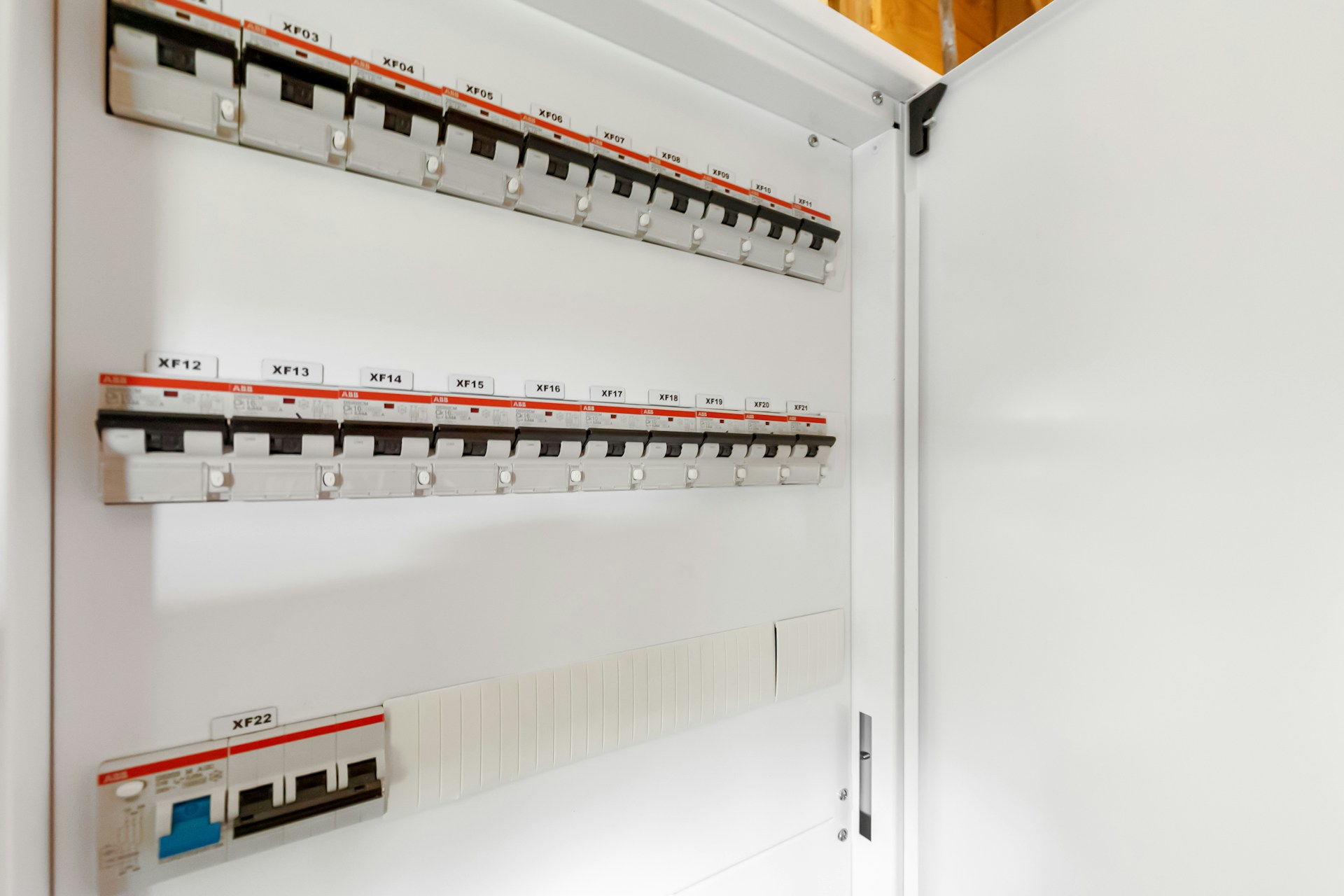
Why Your Circuit Breaker Keeps Tripping
A breaker trips when the current flowing through a circuit passes the amount that circuit was built to carry. That is overcurrent, and shutting off power is the designed response.
What a Tripped Circuit Breaker Is Designed to Do
Every breaker in your electrical panel guards one branch of wiring. When current climbs past the breaker rating for long enough, an internal mechanism opens and cuts the flow of electricity.
Without that cutoff, the wire inside your walls would keep heating. Insulation softens, then chars, and the risk of fire climbs fast. A tripped circuit breaker is the cheapest safety device in your home doing exactly what it was made to do.
So the tripping itself is protection. The real question is what keeps pushing that circuit past its limit.
How Breaker Rating and Electrical Load Affect Tripping
Most household circuits are 15-amp or 20-amp. A 15-amp circuit handles about 1,800 watts, while a 20-amp circuit handles roughly 2,400 watts.
Now compare that to what you plug in. A hair dryer pulls around 1,500 watts. A space heater pulls about the same. A microwave draws 1,000 to 1,500 watts.
Two of those on one circuit and you are over the line. A sustained overload does not always trip the breaker right away. The breaker measures heat buildup, so a small overload may run for several minutes before it gives up.
Why Summer Air Conditioner Use Can Overload a Circuit
Las Vegas summers keep air conditioning equipment running for hours at a stretch, and long run times mean long, steady current draw. Compressors also pull a large surge of current each time they start.
High ambient temperature makes that harder on the hardware. Breakers are thermal devices, so a panel sitting in a hot garage or on a sun-facing exterior wall is already warm before any load arrives. That warmth can push a marginal circuit over the edge on a 110-degree afternoon.
An aging air conditioner that struggles to start also draws more current than it should, which shows up as repeated trips on the AC breaker. That is one pattern worth separating from the everyday faults behind most tripping.
The Most Common Electrical Faults Behind Repeated Trips
Four problems cause the large majority of repeat trips: an overloaded circuit, a short circuit, a ground fault, or a breaker that has worn out. Each one leaves a different fingerprint.
Overloaded Circuits From Too Many Appliances
Circuit overload is the most common reason breakers trip, and it is the easiest to correct. The circuit is carrying more than its rating, so the breaker shuts it down.
Typical culprits are the appliances that turn electricity into heat or motion: a toaster, a heater, a hair dryer, or a vacuum. Add a refrigerator or washing machine already on the same line and you are close to the limit before anyone touches a switch. Electric vehicle (EV) chargers belong on their own circuit for this exact reason.
The tell is timing. Overloaded circuits trip while you are using several things at once, and they behave fine after you unplug something.
Short Circuits Caused by Damaged Wiring or Appliances
A short circuit happens when a hot wire touches a neutral or another hot wire. Current spikes to hundreds of amps in an instant, and the breaker trips right away.
Causes include a nail driven through a cable, faulty wiring at an outlet, loose connections, insulation breakdown in older cable, and rodents chewing wire. A failing motor inside an appliance can also short internally.
Warning signs follow the fault: a popping sound, a burning smell, or scorch marks around an outlet. Short circuits generate enough heat to ignite nearby material, which is why repeated resets make the situation worse.
Ground Faults and Moisture Around GFCI Outlets
A ground fault means current is leaking out of its intended path, often through water, a metal surface, or damaged insulation. Leakage current that small is invisible, and it can be fatal.
That is why a ground fault circuit interrupter (GFCI) is required near water. Code guidance calls for GFCI protection on 15- and 20-amp receptacles within 6 feet of a sink, bathtub, or shower, plus garages, bathrooms, laundry areas, and exterior outlets.
Look for corrosion or rust at outdoor boxes, water intrusion after irrigation or a rare storm, and appliances with internal moisture damage. An arc fault circuit interrupter (AFCI) breaker trips on a different signal, the erratic waveform of arcing inside wiring.
When a Worn or Failing Breaker Is the Problem
Breakers are mechanical parts, and mechanical wear catches up with them. Contacts pit, springs weaken, and the thermal element drifts out of calibration after decades of service.
A breaker with calibration drift trips at less than its rated current. That is nuisance tripping: the load is normal, the wiring is fine, and the device itself is the fault. Breaker replacement by a qualified electrician fixes it.
Sorting an overload from a fault does not require tools, only a careful order of steps.
What You Can Safely Check Before Calling an Electrician
You can do three things safely: find the affected circuit, reset the breaker once, and test what is plugged into it. Never remove the cover of your breaker panel.
Identify the Affected Circuit and Unplug Connected Devices
Start at the electrical panel and find the breaker sitting between on and off. That handle position marks the tripped circuit.
Then map the circuit. Walk the rooms that lost power and note every outlet, light, and hardwired item on that line. A circuit breaker finder or circuit tracer makes this faster if your panel labels are wrong or missing, which is common in older homes.
Unplug everything on that circuit:
- Small appliances such as a microwave, toaster, heater, hair dryer, or iron
- Chargers, power strips, and any surge protector
- Anything hidden behind furniture or inside a cabinet
Turn off the light switches on that circuit too.
How to Reset a Breaker Once and Test Appliances One at a Time
Push the handle firmly to OFF first, then back to ON. The full off stroke resets the internal spring; pushing straight to ON often does nothing.
If the breaker trips again with nothing plugged in, stop. That points to a fault in the permanent wiring or the breaker, and more resets only stress the panel and the wire.
If it holds, add devices back slowly. Plug in one item, turn it on, and wait about two minutes before adding the next. If one specific device trips the breaker every time, that device has an internal fault. If the trip happens only after several are running, you have an overload.
Reduce Load and Use Dedicated Circuits for Heavy Equipment
Spread the heat-producing appliances across different rooms so they land on different circuits. Two 1,500-watt devices on one 15-amp line will fail every time, no matter how new the breaker is.
For anything that runs long and hard, a dedicated circuit is the correct fix. Window air conditioners, garage freezers, EV chargers, and shop equipment all belong on their own line installed by a licensed electrician.
Changing load conditions solves overloads. It does nothing for a wiring fault, and some patterns tell you immediately that the problem is past the DIY line.
When Repeated Tripping Requires a Licensed Electrician
Call a licensed electrician when the breaker trips instantly, will not reset, or trips with nothing plugged in. Those patterns mean a fault in the wiring or hardware, not a load you can shuffle around.
Breaker Trips Immediately or Will Not Reset
A breaker that trips the moment you reset it is reacting to a hard short, a near zero resistance path between conductors. Each reset sends another enormous surge through that fault.
A breaker that will not reset at all may be internally damaged, or it may be responding to a fault that never cleared. Either way, leave it off. Losing one circuit for a day beats damaging the panel or starting a fire.
If the trip happens with every device unplugged, suspect hardwired equipment on the line, damaged wiring inside the wall, or the breaker itself.
Warning Signs of Fire, Shock, or Hidden Wiring Damage
Some signals mean you stop troubleshooting and pick up the phone:
- A burning plastic smell anywhere near outlets, switches, or the panel
- Scorch marks, discoloration, or melted plastic on a receptacle or faceplate
- Buzzing, crackling, or sizzling sounds from a wall or the panel
- A breaker or cover plate that feels hot to the touch
- Flickering lights, or lights that brighten and dim on their own
- Any tingle or shock from an appliance or switch plate
Electrical fires and electrocution both begin with conditions that gave warning first. Currents as low as 50 to 100 milliamperes can be fatal, which is a fraction of what a single 15-amp circuit carries. Treat any of the signs above as urgent.
Electrical Panel Problems That Need Professional Diagnosis
Some electrical panel problems only a professional can evaluate safely. Inspection guidance flags rust inside a panelboard as evidence of past moisture intrusion, along with excessive dust and debris, both of which can trigger an arc flash.
Panel ventilation matters in a hot Las Vegas garage, and vibration from a nearby door opener can loosen connections over time. Homes with aluminum wiring, knob-and-tube wiring, or undersized wire gauge need a full evaluation, not a breaker swap.
A qualified electrician works with personal protective equipment (PPE) and instruments to trace the fault, then repairs or replaces what failed. The next question for most homeowners is who pays for that work.
How Home Warranty Coverage Can Help With Future Electrical Repairs
A home warranty plan can help with eligible breakdowns of covered electrical system components caused by normal wear and tear. It applies to future failures, not to a problem that already exists when you buy the plan.
What Eligible Electrical Panel Coverage May Include
Electrical system coverage is part of the home warranty plans offered at every tier, starting with the Essential Plan. Covered electrical components can include outlets, light switches, wiring, ceiling exhaust and attic fans, and light fixtures under home warranty systems coverage.
Coverage applies to eligible breakdowns from normal wear and tear and is subject to the plan's service call fee, coverage limits, and exclusions. Your service contract lists exactly which components qualify, so read it before you assume a repair is included. Damage from misuse, accidents, or outside events falls outside a warranty and belongs with your homeowners insurance.
How Existing Plan Holders Can Request Service for a Covered Issue
If you already hold a plan and your breaker keeps tripping, file a claim instead of hunting for a contractor. Submit the request online any time, or call the existing customer line at (702) 641-8888.
After the service fee is paid, the claim is dispatched to a licensed contractor who contacts you within two to three hours to schedule. The technician diagnoses the problem and completes eligible repairs according to your contract. Completed repairs carry a workmanship guarantee, and a contractor returns at no additional cost if a related issue appears within 30 days.
New to coverage? Verify your address and compare options for homeowners, townhouse owners, or anyone shopping for a Nevada home warranty before the next system gives out.
Treat Repeated Trips as a Signal to Protect Your Home
Circuit breaker tripping over and over is data, not background noise. Trace which circuit is affected, redistribute the load, and reset once. If it trips instantly, trips empty, or comes with heat, smell, or noise, stop and call a licensed electrician.
Electrical safety costs far less than an electrical fire. Las Vegas homes ask a lot of their panels during summer, when air conditioning runs all day and garage temperatures climb, so a breaker that suddenly starts nuisance tripping deserves attention now rather than in October.
For everything else that wears out on a desert schedule, coverage brings real peace of mind. Dwellness has served Las Vegas homeowners since 1986, approves 97% of claims, and sends licensed, vetted local contractors for eligible repairs. Call (702) 509-7007 for a free quote, or reach our team to confirm what your plan can cover before the next breakdown finds you.