
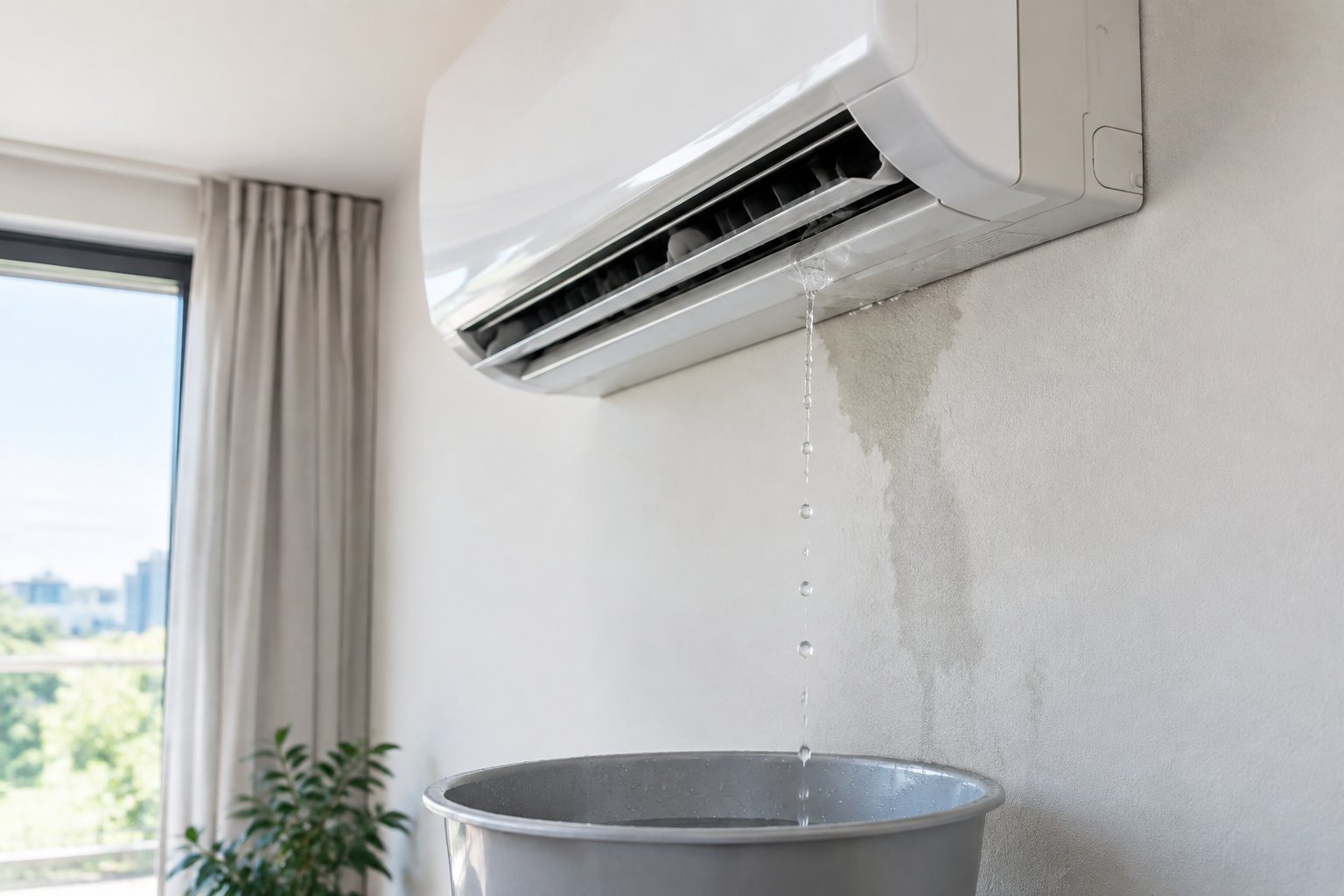
You walk past the hallway closet and the carpet squishes under your foot. Or you spot a dark ring spreading across the ceiling drywall below the attic. In a Las Vegas home, where the air conditioner runs hard from April through October, that puddle feels like two problems at once: water damage now, and no cooling later. So why is my AC leaking water, and how bad is it?
Most indoor AC water leaks trace back to condensation that cannot drain the way it should. Your system pulls moisture out of the air, collects it in a pan, and sends it down a drain line. When that path gets blocked, cracked, or overwhelmed by ice melting off a coil, the water has to go somewhere. Left alone for a few days, it soaks insulation, warps flooring, and invites mold.
Keep reading to learn what each type of leak looks like, which checks you can safely do yourself, and when the problem needs a licensed technician. The advice below is written for Las Vegas homes, where attic air handlers and long cooling seasons change how fast a small leak becomes an expensive one.
Is an AC Water Leak Normal or Urgent?
A small amount of water is normal. A puddle inside your home is not. Your air conditioner removes humidity from indoor air, and that moisture has to drain away through a pipe. Water showing up anywhere other than that drain means something in the system has failed.
Urgency depends on where the water lands. A slow drip into a properly sloped pan that still drains is a maintenance issue. Water running down a wall, dripping through a ceiling, or collecting under an air handler is a same-week problem, sometimes a same-day one.
Las Vegas homes often place the air handler in the attic. Attic air can reach well over 130 degrees in July, which makes the system work harder and produce more condensate than it does in a cooler space. A leak up there also travels straight into your ceiling before you ever see it.
Why Is My AC Leaking Water? Start With Where the Water Appears
The location of the water tells you which part failed. Water under or around the indoor AC unit points to a drainage problem inside the air handler. Water outside at the condenser unit is usually normal runoff, not a defect.
Here is what each spot suggests:
- Pooling under the indoor air handler: clogged drain line, full or damaged drain pan, or a failed pump
- Stains on the ceiling below an attic unit: overflow that has been running for a while
- Dripping from a supply vent or register: excess condensation forming on cold metal
- Water around the outdoor condenser unit: usually normal, since the unit sheds heat and moisture outside
Write down when the water appears. Only while the system runs? Only on the hottest afternoons? Those details help a technician narrow the cause fast.
When Water Near Electrical Components Requires Immediate Action
Turn the system off at the thermostat and at the breaker when you see water touching wiring, a control board, or the electrical panel on the air handler. Do not reach into standing water around the unit. The federal electrical safety handbook from the Department of Energy exists because water and energized equipment are a serious hazard, not a minor one.
Shutting the system down also stops the leak from growing. An AC that keeps running keeps making condensate, and a blocked drain keeps pushing that water into your home.
Once power is off and the area is dry enough to inspect safely, the next question is what actually blocked the water from draining.
Drainage Problems That Cause Indoor Leaks
Drainage failures cause most indoor AC leaks. Water leaves the coil, lands in a pan, and travels out through a condensate drain line. Block any part of that chain and the pan overflows.
Carrier identifies a clogged condensate drain line as one of the most frequent reasons an AC unit leaks water, along with a damaged drain pan. Dust and debris collect in the pipe over a cooling season, and algae or mold build up on top of that.
A musty odor near a vent is often the first hint. Standing water in a warm pan grows mold, and your blower pushes that smell through the ducts before you ever notice a puddle.
How a Clogged Condensate Drain Line Causes Overflow
An AC drain line clog blocks the only exit condensate has. The pan fills, then spills over the edge into whatever sits below: attic insulation, a closet floor, or the ceiling drywall.
You can check this yourself. Find the drain line where it exits your home, usually a white PVC pipe near the outdoor unit or above a laundry sink. With the AC off, look for algae, dirt, or debris at the opening and confirm water can flow freely away.
Carrier's guidance is to turn off the AC and use a wet/dry vacuum at the outdoor end of the drain line to pull out the buildup. Some homeowners follow with distilled vinegar through the access port to slow regrowth. Skip the vacuum entirely when you are not certain which pipe is the condensate drain or how it connects, and call a professional instead.
If the line runs clear and water still collects, the problem sits upstream in the pan or the pump.
What a Damaged Drain Pan or Failed Condensate Pump Looks Like
A cracked or rusted drain pan leaks even when the drain line is wide open. Pans corrode after years of sitting under constant condensate, and the risk climbs as the HVAC system ages.
Look for rust streaks, a visible crack, or standing water sitting off to one side of the pan. A pan that holds water hours after the system shuts off is not draining correctly. Replacement is a technician job, since the pan sits under the coil.
Homes where the air handler sits below the drain exit use a condensate pump to push water uphill. A malfunctioning condensate pump stops moving water, and the reservoir overflows within hours on a hot day. Listen for a pump that hums without cycling, or one that never runs at all.
Drainage covers one half of the problem. The other half starts at the coil itself, where a system that cannot breathe turns condensate into ice.
Airflow and Refrigerant Issues Behind a Frozen Coil
A frozen evaporator coil leaks water the moment it thaws. Ice builds on the coil while the system runs, then melts all at once when the AC cycles off, sending far more water into the pan than the drain can handle.
Two things cause that ice: restricted airflow and low refrigerant. Both starve the coil of the heat it needs to stay above freezing.
You can spot a frozen coil without opening anything. The refrigerant lines running to the outdoor unit will feel frosty or look iced over. Air from the vents turns weak even though the system sounds like it is working hard.
Can a Dirty Air Filter Make an AC Leak Water?
Yes. A clogged air filter restricts airflow across the evaporator coil, the coil drops below freezing, and the ice that forms melts into a leak. Carrier recommends replacing air filters every one to three months and inspecting them monthly.
Las Vegas homes go through filters faster than that recommendation suggests. Fine desert dust and long run times load a filter quickly, especially in a home near open land or active construction.
Here is the safe DIY sequence:
- Switch the thermostat to off, then set the fan to on so warm air melts the ice
- Pull the filter and hold it up to a light; replace it when you cannot see light through it
- Wait several hours for the coil to thaw completely before restarting cooling
- Watch for water in the pan as the ice melts, and clear it so the pan does not overflow
If a fresh filter fixes the freeze, you found the cause. If the coil ices over again within a day or two, something deeper is wrong.
Why Frozen Evaporator Coils and Low Refrigerant Need Professional Help
Low refrigerant means a leak somewhere in a sealed system. Refrigerant does not get used up, so a low charge always points to a leak that a licensed technician has to locate and repair before recharging.
A dirty evaporator coil behaves the same way as a dirty filter, blocking airflow and freezing over. Cleaning that coil requires opening the air handler and using the right cleaner, which is why it belongs in a professional tune-up.
Short cycling, where the system turns on and off in quick bursts, can also point to a charge or control problem. A thermostat reading incorrectly will do it too. Either way, a technician with gauges settles the question in one visit.
Knowing the cause is one thing. Knowing what to do in the next hour is another.
What to Do Now and When to Schedule AC Water Leak Repair
Shut the system off first. Turn the thermostat to off and, when water sits near electrical parts, flip the breaker. Then dry the area and put a shallow pan or towels under the drip while you work out the cause.
Take photos of the water and any stained drywall or flooring before you clean up. Those photos help if you later need to document damage for a homeowners insurance claim.
Safe Checks to Make Before Restarting the System
Run through a short list before you turn cooling back on. These checks are safe for most homeowners and take about fifteen minutes.
- Replace the air filter and confirm the return grille is not blocked by furniture
- Check that all supply vents are open, since closing too many restricts airflow
- Look at the drain pan for standing water, rust, or a visible crack
- Find the drain line exit outside and confirm water drips out while the system runs
- Test the float switch if your unit has one; it shuts the AC off when the pan fills
A float switch that keeps tripping is doing its job. Reset it once, but stop resetting it if the system trips again. That repeated shutoff means the water is still backing up.
When an HVAC Technician Should Inspect the Leak
Call a heating, ventilation, and air conditioning (HVAC) technician when the leak returns after a filter change and a cleared drain line. Also call when you see ice on the refrigerant lines, rust in the pan, or water anywhere near the electrical panel.
An HVAC professional will clear the line under pressure, inspect the pan and pump, check the refrigerant charge, and test the float switch. Most drainage problems get resolved in a single visit once the right tools are on site.
Attic units deserve faster attention in Las Vegas. Water sitting above your ceiling in 130-degree attic air does damage quickly, and the repair bill grows with every day you wait.
How Home Warranty AC Leak Coverage May Apply
A home warranty plan helps with eligible mechanical breakdowns of covered air conditioning components caused by normal wear and tear. That applies to failures such as a broken condensate pump or a damaged drain pan, subject to your plan's service call fee, coverage limits, and exclusions.
Routine work sits outside that. Clearing a clogged drain line and replacing a dirty air filter are maintenance tasks, not covered breakdowns. A warranty also does not pay for water damage to your floors, drywall, or belongings. Your homeowners insurance policy may cover that damage, depending on the cause and your policy terms.
If you already have a plan and your AC is leaking right now, file a service request instead of waiting. A plan bought today will not cover a leak that started yesterday, which is why coverage works best before anything breaks. For a deeper look at how this applies across major systems, review the home warranty systems coverage details and the air conditioning warranty options available locally.
Stopping today's leak solves today's problem. Keeping it from happening again takes a different approach.
Protecting Your Las Vegas Home From Repeat AC Leaks
Annual maintenance can reduce the risk of repeat leaks. Carrier recommends having the coils and condensate drain cleaned and inspected at least once a year, ideally before the cooling season begins. Jennifer Fletcher, owner of Modern Air Solutions, puts it plainly in Carrier's guidance: a dirty system has to work harder, straining every component and leading to early failure.
Las Vegas cooling seasons stretch longer than most of the country, so that annual visit carries more weight here. An air conditioner that runs six or seven months collects more dust in the drain line and more wear on the pump than one that runs three.
Build a simple routine around these habits:
- Check the air filter monthly and change it every one to three months
- Have a professional clean the condensate drain line before summer starts
- Keep the area around the indoor air handler clear so you can spot water early
- Schedule an AC tune-up each spring, before the first stretch of triple-digit days
A plumbing and HVAC maintenance plan is included with the Essential Plan and higher tiers, and the Premium Plan waives the trade call fee for one eligible maintenance or tune-up visit per year. Regular service also gives a technician a chance to catch a corroding pan before it cracks.
Stay Ahead of the Next AC Surprise
An air conditioner leaking water almost always comes down to blocked drainage or a frozen coil. Check the filter, look at the drain pan, confirm the drain line runs clear, and shut the system off when water reaches anything electrical. Those four steps cover most situations and tell you whether you need a technician.
The rest comes down to timing. In a desert summer, an AC water leak repair you put off for a week can turn into ceiling damage and a system that quits on a 112-degree afternoon. Annual maintenance is the cheapest insurance against both.
If you want predictable costs the next time a covered system fails, Dwellness approves 97% of claims and assigns you a local account manager who knows Las Vegas homes. Compare home warranty plans or request a free quote at (702) 509-7007. Existing customers can file a claim at (702) 641-8888.