
When comparing a clockwise fan vs. counterclockwise fan, the right direction generally depends on the season. During warmer months, a ceiling fan should typically rotate counterclockwise to create a downward breeze that helps you feel cooler. During colder months, running the fan clockwise at a low speed can help redistribute warm air that has collected near the ceiling.
Changing your ceiling fan direction is a small home maintenance task, but it can make your rooms more comfortable and help your heating and air conditioning systems work more efficiently.
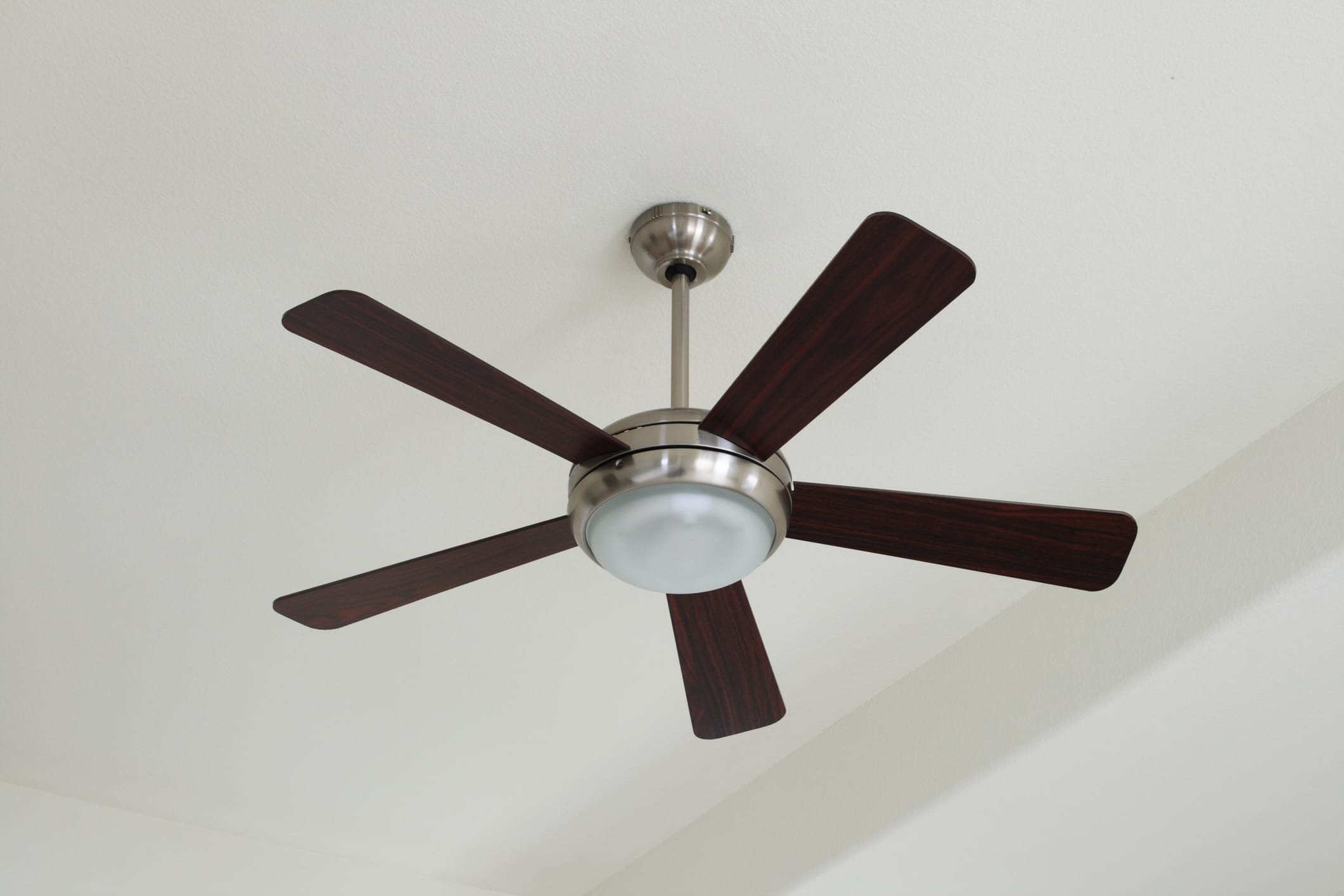
Why Does Ceiling Fan Direction Matter?
A ceiling fan does not actually lower or raise the temperature of a room. Instead, the direction of the fan blades determines how air circulates through the space.
In summer, you want moving air directed toward the people in the room. That airflow creates a wind-chill effect that can make your skin feel cooler.
Winter is different. Warm air naturally rises and collects near the ceiling. Instead of creating a strong downward breeze, the goal is to gently circulate that warm air back into the living space.
That is why most ceiling fans are designed to operate in two directions.
Counterclockwise Fan Direction for Summer
During warm weather, your ceiling fan should generally rotate counterclockwise when viewed from below.
This direction pushes air downward and creates the breeze you associate with a ceiling fan. While the fan is not actually cooling the room, that moving air can make you feel more comfortable and may allow you to rely a little less heavily on your air conditioning.
For the best cooling effect:
- Set the fan to rotate counterclockwise.
- Use a medium or higher speed depending on your comfort.
- Turn fans off when you leave an empty room.
- Use your ceiling fan alongside your air conditioner rather than treating it as a replacement for AC.
That last point is important. Fans cool people, not rooms. Leaving a ceiling fan running in an empty room generally does not provide a cooling benefit.
Clockwise Fan Direction for Winter
When temperatures drop, reverse the fan so it rotates clockwise when viewed from below.
Set the fan to a low speed. This creates a gentle circulation pattern that helps move warm air away from the ceiling and redistribute it throughout the room without producing an uncomfortable cooling breeze.
This can be particularly useful in rooms with high or vaulted ceilings, where a significant amount of heated air can accumulate overhead.
You should not feel a strong draft beneath the fan in winter. If you do, make sure the fan is turning clockwise and reduce its speed.
Clockwise Fan vs. Counterclockwise at a Glance
| Season | Fan Direction | Recommended Speed | Purpose |
|---|---|---|---|
| Summer | Counterclockwise | Medium to high | Creates a downward cooling breeze |
| Winter | Clockwise | Low | Helps redistribute warm air |
| Spring | Usually counterclockwise | As needed | Improves comfort as temperatures rise |
| Fall | Depends on temperature | As needed | Transition based on heating or cooling needs |
You do not necessarily need to change your fan direction on the first official day of each season. Base the setting on whether you are primarily trying to cool yourself or redistribute heated air.
How Can You Tell Which Direction Your Fan Is Turning?
Stand directly underneath your ceiling fan and look up.
If the blades move from the top toward the left, then down the right side, the fan is rotating counterclockwise. If they travel from the top toward the right and down the left, the fan is rotating clockwise.
There is an even easier test during warmer weather. Turn the fan to a moderate or high speed and stand beneath it. If you feel a strong downward breeze, the fan is probably set correctly for summer.
If you're unsure, turn the fan off and wait until the blades stop completely before inspecting or adjusting anything.
How to Change Your Ceiling Fan Direction
Changing fan direction is usually simple, although the exact process depends on the model.
Traditional ceiling fans commonly have a small direction switch on the motor housing. Turn the fan off, wait until the blades stop moving completely, locate the switch, and move it to the opposite position. Turn the fan back on and confirm that its rotation has reversed.
Newer ceiling fans may work differently. Some models allow you to change direction using a remote control, wall control, or smart home app.
If you cannot find a switch or reverse function, check the owner's manual for your specific model rather than trying to adjust the fan manually.
Can Ceiling Fan Direction Help With Energy Efficiency?
Used correctly, ceiling fans can complement your home's HVAC system and potentially help reduce energy use.
During summer, the wind-chill effect created by a counterclockwise fan can make you feel comfortable at a somewhat higher thermostat setting. Your air conditioner may then have less work to do to maintain your preferred comfort level.
During winter, clockwise rotation can help redistribute heated air that would otherwise remain near the ceiling. That may be especially useful in taller rooms.
The key is using your ceiling fan strategically. A fan motor still consumes electricity, so there is little reason to leave it running when nobody is in the room.
Should You Run a Ceiling Fan With Air Conditioning?
Yes. In fact, ceiling fans and air conditioning can work very well together.
Your AC system actually cools the home's air, while the ceiling fan moves that conditioned air around the room and creates a cooling sensation on your skin. With the fan running counterclockwise, you may feel comfortable without setting the thermostat quite as low.
If you have a room that remains noticeably warmer than the rest of your home even with the fan operating correctly, however, the problem may not be the fan. Weak airflow, ductwork problems, thermostat issues, dirty HVAC filters, or an air conditioning problem could be responsible.
What If My Ceiling Fan Is Spinning the Right Way but I Don't Feel Air?
First, check the fan speed. A counterclockwise fan operating at its lowest setting may not create the noticeable breeze you're expecting.
If increasing the speed does not help, make sure you're correctly identifying the direction from underneath the fan. Blade design, ceiling height, and fan size can also affect how much airflow you feel.
A fan that suddenly produces significantly less airflow than it once did may need cleaning or maintenance. Dust buildup on the blades can affect performance, and mechanical or electrical problems may require professional attention.
Why Do Ceiling Fans Have Two Directions?
The reverse function makes a ceiling fan useful throughout more of the year.
Counterclockwise rotation is designed primarily to create a direct breeze for warmer conditions. Clockwise rotation changes the circulation pattern so the fan can help redistribute warm air without creating the same cooling sensation.
Think of your ceiling fan as an assistant to your HVAC system. Changing its direction helps that assistant perform a different job depending on what your home needs.
Key Takeaways
For the clockwise fan vs. counterclockwise question, remember one simple rule: counterclockwise for summer and clockwise for winter.
Counterclockwise rotation creates a downward breeze that helps you feel cooler when used with your air conditioning. Clockwise rotation at a low speed can help circulate warm air during heating season. Because ceiling fans primarily make people feel cooler rather than actually lowering room temperature, turn them off when rooms are unoccupied.
Check your fan direction whenever your home's heating or cooling needs change. It takes only a few moments and can help you get more comfort from equipment you already have.
FAQs About Clockwise vs. Counterclockwise Ceiling Fans
Keep Your Las Vegas Home Comfortable With Dwellness
Knowing the difference between a clockwise fan vs. counterclockwise fan can help you get more from your ceiling fans throughout the year. But when the problem goes beyond fan direction and involves a covered ceiling fan, electrical system, or HVAC component, an unexpected repair can quickly become another item on your homeownership to-do list.
Dwellness helps Las Vegas homeowners prepare for eligible breakdowns with home warranty coverage designed for the systems and appliances they depend on every day. Contact Dwellness today to learn about your coverage options and discover how we can help protect your Las Vegas home.