
Barefoot in the hallway at night, you notice one patch of tile is warm. Not hot, just warmer than the tile either side of it, and it has been that way for a week. Almost every house in the Las Vegas Valley sits on a concrete slab with the water lines running underneath or through it, and when one of those lines fails, the signs of a slab leak show up in exactly this kind of small, strange way. Nothing drips. Nothing sprays. The water goes into the ground, and the house tells you about it sideways.
This post walks through the eight signs in roughly the order homeowners notice them, then the one test that tells you whether to call, and what a plumber does after that.
Why slab homes in this valley get these leaks
Builders here have run copper water lines under and through slabs for decades. Copper and concrete do not get along well over time. The pipe expands and contracts with every hot water cycle and rubs against the concrete, hot water lines corrode from the inside, our hard, mineral-heavy water abrades and pits the pipe wall, and the desert soil shifts a little as it wets and dries. Any one of those can open a pinhole; together they explain why plumbers here treat slab leaks as routine rather than rare. Hot water lines fail more often than cold ones, which is why the first sign on the list is a warm floor.
Newer homes with plastic (PEX) lines routed through the attic instead of the slab largely avoid this, but a large share of the valley's housing stock was built before that became common.
Sign one: a warm or hot spot on the floor
A hot water line leaking under the slab heats the concrete above it, and tile, laminate or vinyl conducts that warmth to your feet. The spot is usually a foot or two across, stays warm all day, and is most noticeable on bare feet or to a pet that suddenly prefers one patch of floor. A cold water line leak produces no warm spot, which is part of why cold-side slab leaks go undetected longer.
Sign two: the sound of running water when nothing is on
Stand in a quiet house with every faucet off, the irrigation off, and the washing machine and dishwasher idle. If you hear a faint hiss or rushing sound, often loudest near the water heater, under a bathroom cabinet or at the main shutoff, water is moving somewhere it should not be. Press an ear to the floor near the suspected area; a slab leak often transmits through the concrete.
Sign three: a water bill that climbs with no change in habits
A slab leak runs twenty-four hours a day. Over a billing period that adds up to a jump you cannot explain with a houseguest or a hot month. The Las Vegas Valley Water District also contacts account holders when the meter records continuous flow for at least three days, so a notice from the district about continuous use is worth taking seriously even if the bill has not arrived yet.
Sign four: the water heater runs constantly
If the leak is on the hot side, the heater is refilling and reheating around the clock. A gas unit's burner seems to be on every time you walk past; an electric one never seems to rest. Hot water may also run out faster than it used to. This sign is easy to blame on the heater itself, which is how a slab leak gets misdiagnosed as a tired tank.
Sign five: damp flooring, lifted tile, or a musty smell
Water under a slab eventually finds its way up. Carpet feels damp in one area with no spill to explain it. Laminate planks swell or lift at the seams. Grout lines darken. Tiles sound hollow when tapped, or crack along a line. A mildew smell with no visible source, especially in a closet or along a baseboard, is moisture under the floor covering.
Sign six: cracks in the slab, the tile, or the walls
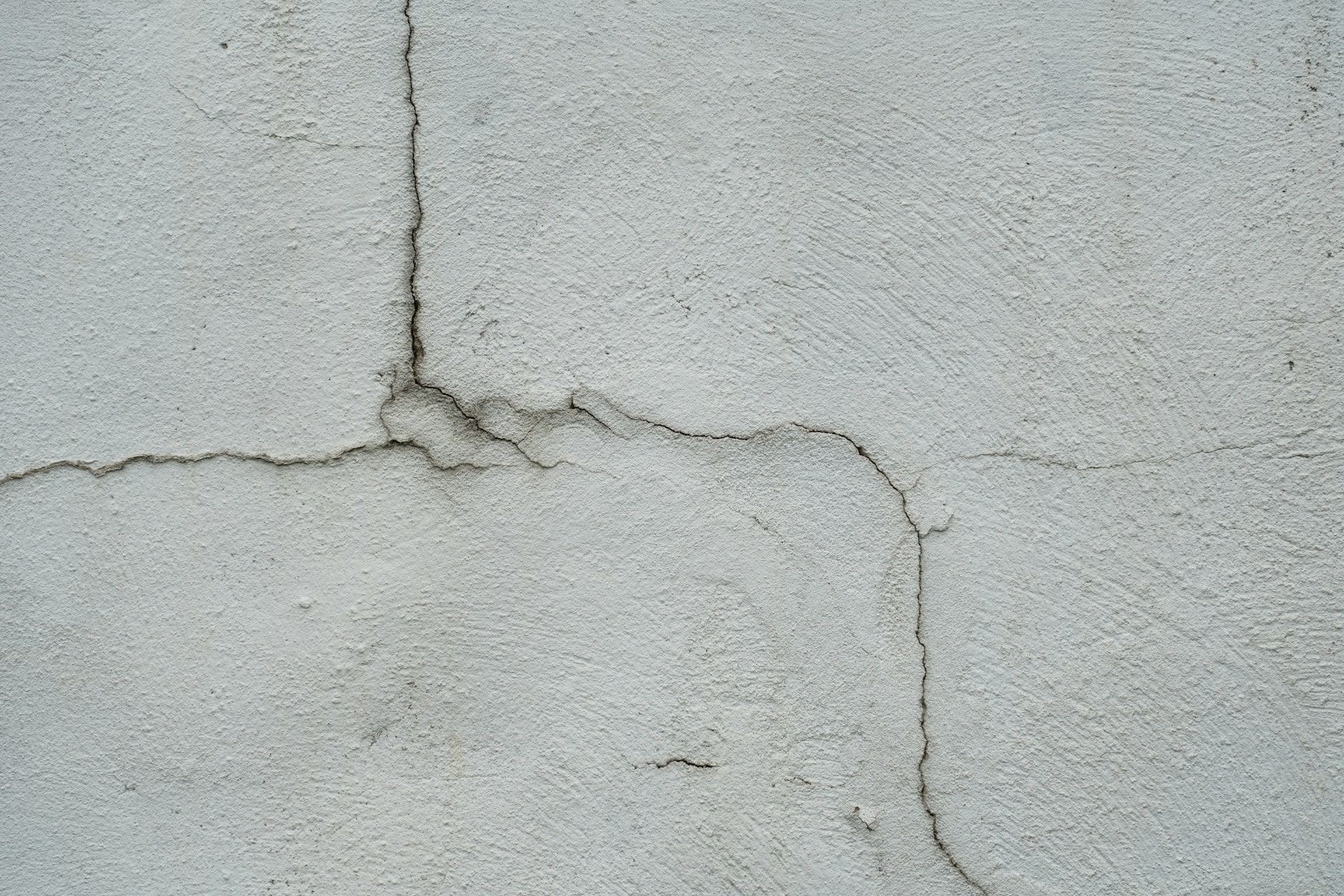
Concrete that is kept wet on one side and dry on the other moves, and so does the soil under it. Hairline cracks across a tile floor, a crack in the slab you can see in the garage or a closet, or new cracks at the corners of door frames and windows can all follow a long-running leak. Desert soil can also heave when it gets wet after years of being dry, which lifts one part of the slab against another.
Sign seven: low water pressure with no other explanation
A leak big enough to pull pressure down at the fixtures is usually big enough to produce other signs too, but in a house with high street pressure, a drop you notice in the shower may be the first clue. If pressure fell and the pressure regulator checks out, a leak is the next suspect.
Sign eight: wet soil or greener grass against the foundation
Water escaping the slab near its edge comes out at the perimeter. A patch of ground against the house that stays damp in July, a strip of lawn that is greener than the rest, or efflorescence (white mineral crust) on the lower part of a stucco wall or the garage slab are the outdoor versions of the signs above.
The meter test confirms there is a leak before anyone cuts concrete
None of the eight signs proves a slab leak on its own; a warm floor can be a hot water line running through the slab normally, and a high bill can be a toilet. The meter test narrows it down, and the water district's own guidance describes it: turn off every fixture inside and out, then look at the small flow indicator (a triangle or star wheel) on the meter. If it is still turning, water is moving. Then close the main shutoff valve at the house and check again. If the indicator stops, the leak is inside the house or under it. If it keeps turning with the house valve closed, the leak is in the service line between the meter and the house, which is a different repair.
One more quick check if the house valve stops the meter: shut the cold inlet valve on top of the water heater and see whether the sound of running water stops. If it does, the hot line is the one that failed.
How a plumber finds and fixes the leak
Confirming a slab leak is the plumber's job and it is not guesswork. The hot and cold lines are isolated and pressure tested separately to see which one loses pressure. Electronic listening equipment and sometimes thermal imaging locate the leak along the line to within a foot or two. Only then does anyone talk about concrete.
There are three repair approaches. A spot repair opens the slab over the leak, fixes the pipe and patches the floor; it is the most direct but means cutting into the floor and whatever covers it. A reroute abandons the failed section under the slab and runs a new line overhead through the attic or walls to the same fixtures, which avoids opening the floor and is common in Las Vegas because attics are accessible. A repipe replaces all the under-slab lines with new ones routed overhead, which is the answer when a second or third leak shows a system that is failing throughout. The plumber's recommendation depends on where the leak is, how old the lines are, and what the floor is made of.
Where a home warranty fits with a slab leak
Standard home warranty plumbing coverage, including the plumbing system coverage in every Dwellness plan, applies to the pipes and fixtures inside the home. Leaks under the slab are handled as a separate add-on, and Dwellness offers under slab leak coverage as one of its optional add-ons alongside the exterior water service line, which covers that stretch between the meter and the house identified in the meter test.
The under slab leak home warranty page describes how that coverage works. In practice, when a covered leak is suspected, you report it to Dwellness online or by phone at (702) 641-8888, and a licensed local plumber is sent to confirm the diagnosis. Dwellness has been doing this for Las Vegas homeowners since 1986, resolves more than 85 percent of claims on the first visit, and allows coverage to be adjusted for up to 30 days after the initial payment, which matters if you buy a plan and then realize an add-on makes sense for a slab home. What any contract excludes is a leak that existed before coverage began or damage from ignoring a known problem, which is one more reason the eight signs above are worth acting on when you first notice them.
A slab leak is one of the few plumbing problems that does more damage with every day it is ignored, and the signs are easy to explain away for months. Trust the warm tile and the meter. If a leak is confirmed, the repair is well understood and local plumbers do them every week. If you would rather have coverage in place before the floor gets warm, call (702) 509-7007 or request a free quote at dwellness.house and ask about the under slab leak add-on.