
How often should air ducts be cleaned? Unlike an HVAC filter, air ducts do not necessarily need to be cleaned on a fixed schedule. Many homeowners may go several years without needing professional duct cleaning. Rather than automatically cleaning your air ducts every year, it is generally better to have them cleaned when there is evidence of significant dust or debris buildup, visible mold growth, pest activity, or another specific problem inside the ductwork.
Regular HVAC maintenance and filter changes can help keep your heating and cooling system operating properly between duct cleanings. Knowing what to look for can also help you determine when your ducts actually need professional attention.
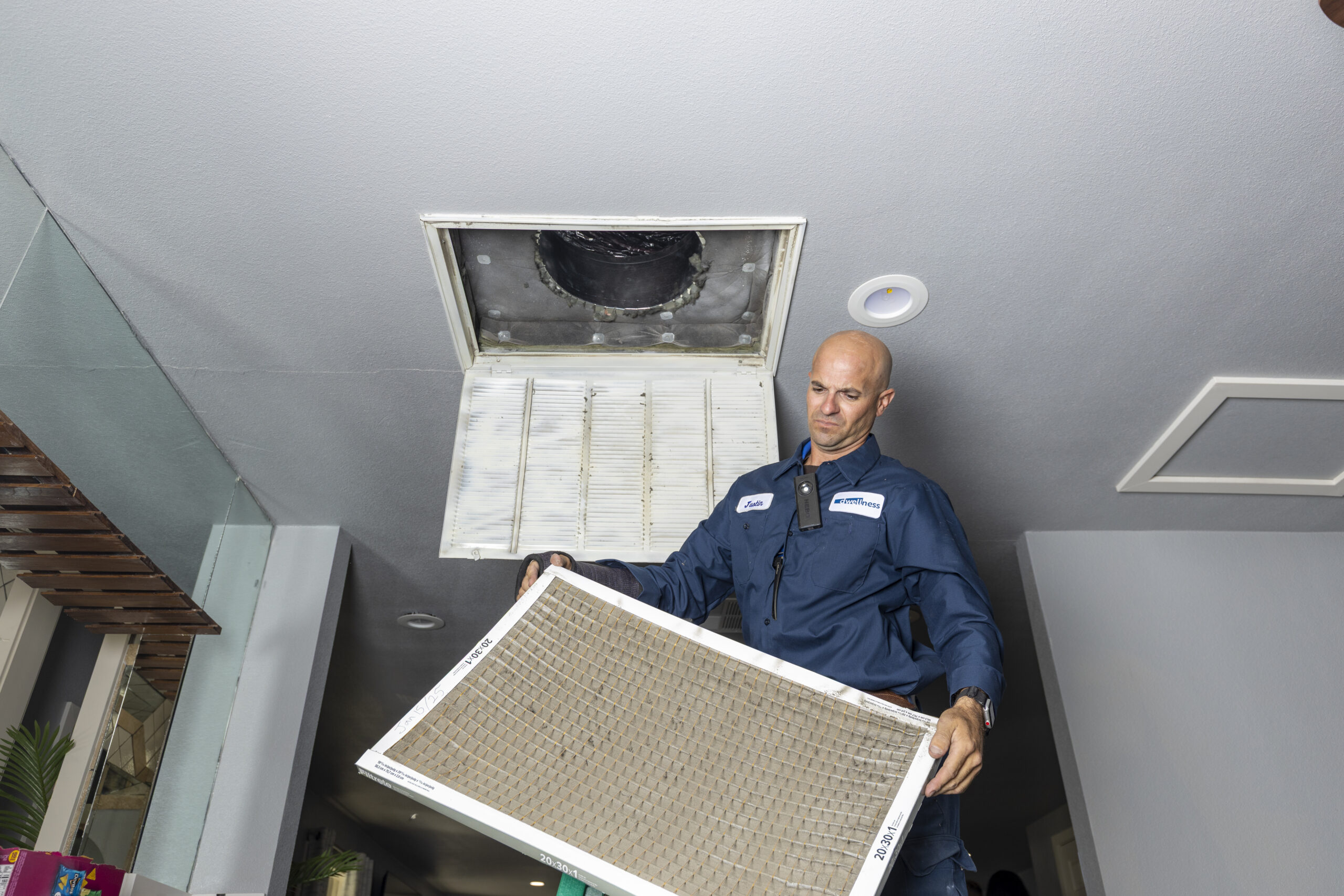
Do Air Ducts Need to Be Cleaned Regularly?
Air ducts carry conditioned air from your HVAC system throughout your home. Over time, some dust and debris can settle inside the ductwork.
However, the presence of a little dust does not automatically mean your ducts need to be professionally cleaned. Some buildup is normal, and much of it may remain attached to the duct surfaces rather than circulating throughout your house.
Instead of treating duct cleaning as an annual maintenance requirement, pay attention to the condition of your HVAC system and the ductwork you can safely see.
If you're unsure whether cleaning is necessary, an HVAC professional can inspect the system and help identify whether you have a problem that warrants it.
Signs Your Air Ducts May Need Cleaning
So, when should you clean air ducts? There are several situations in which professional cleaning may be worth considering.
You Can See Significant Dust or Debris
Take a look at accessible supply and return registers. Some household dust around a vent is normal, but substantial accumulations of debris inside the ductwork may deserve closer attention.
If you clean the registers and they quickly become heavily coated again, consider having the HVAC system inspected to determine where the debris is coming from.
There Is Visible Mold Growth
Visible mold growth inside hard-surface ducts or other HVAC components should be investigated.
Keep in mind that something that looks like mold is not always mold. Identifying the underlying moisture problem is also important because cleaning alone will not prevent growth from returning if excess moisture remains.
Porous or insulated duct materials affected by mold can be more difficult to address and may require replacement rather than simple cleaning.
You Have Signs of Pests
Rodents, insects, or other pests inside ductwork can leave behind nesting materials and other contaminants.
If you suspect an infestation, address the pest problem first. The ductwork can then be inspected and cleaned as appropriate.
Debris Is Coming Out of Your Vents
Visible particles blowing from supply registers may indicate that the HVAC system needs attention.
Duct cleaning is one possibility, but do not assume the ducts are automatically responsible. A professional can inspect the system for other potential sources of the debris.
You Recently Completed Major Renovations
Home remodeling can generate substantial amounts of drywall dust, sawdust, and construction debris. Even with precautions, some material can find its way into the HVAC system.
After a particularly dusty renovation, an inspection can help determine whether the ductwork needs cleaning.
Can Dirty Air Ducts Affect Indoor Air Quality?
Indoor air quality depends on many factors, including ventilation, humidity, filtration, pets, smoking, outdoor pollutants, household products, and the condition of your HVAC system.
Contaminated ductwork can potentially contribute to indoor air problems in certain situations, particularly when mold, pests, or substantial debris are present. However, duct cleaning should not be treated as a cure-all for allergies, dust, or poor indoor air quality.
If your home seems unusually dusty, start by looking at the bigger picture. Check your HVAC filter, look for air leaks, consider household sources of dust, and make sure your HVAC equipment is being appropriately maintained.
Addressing the actual source of the problem will generally be more useful than repeatedly cleaning ducts without knowing why they are getting dirty
Air Duct Cleaning vs. HVAC Maintenance
Air duct cleaning and HVAC maintenance are related, but they are not the same service.
Duct cleaning focuses on removing contaminants or debris from ductwork and potentially other components included in the cleaning service. Routine HVAC maintenance focuses on keeping your heating and cooling equipment operating correctly.
Regular HVAC maintenance may include inspecting equipment, checking drainage, evaluating system performance, and identifying components that need attention. Homeowners should also replace or clean HVAC filters according to the filter and equipment manufacturer's recommendations.
You may need regular HVAC maintenance without needing your ducts cleaned every year.
How Often Should You Change Your HVAC Filter?
Your air filter needs much more frequent attention than your ductwork.
There is no universal filter replacement schedule because filters vary. Your household conditions matter, too. Pets, heavy HVAC usage, indoor air conditions, and the type of filter you use can all affect how quickly it becomes dirty.
Check the filter regularly and follow the manufacturer's replacement or cleaning recommendations. If the filter becomes visibly dirty or begins restricting airflow before the suggested replacement date, it may need attention sooner.
A properly maintained filter can also help limit the amount of airborne debris entering portions of your HVAC system.
Does Air Duct Cleaning Improve HVAC Efficiency?
You may see claims that routine duct cleaning dramatically reduces energy bills or significantly improves HVAC efficiency. Be cautious about broad promises.
If airflow is actually being restricted by a serious accumulation of debris, addressing that obstruction can help the system operate as intended. But cleaning relatively clean ducts is unlikely to transform the performance of your air conditioner.
If you're concerned about HVAC efficiency, professional system maintenance, appropriate filtration, proper airflow, thermostat settings, and the condition of the equipment itself are all worth evaluating.
What Happens During Professional Air Duct Cleaning?
The exact process depends on the company and the HVAC system.
Generally, professional duct cleaning involves accessing the ductwork and using specialized equipment to loosen and remove accumulated debris. A thorough service may address supply and return ducts as well as accessible registers and other relevant components.
Before hiring a company, ask exactly what its service includes. "Duct cleaning" can mean different things depending on the provider.
You should also ask how the company protects your home during cleaning and what equipment it uses to prevent loosened debris from being released into living areas.
Can You Clean Air Ducts Yourself?
Homeowners can safely handle some basic cleaning around accessible vents and registers.
After turning off the HVAC system as appropriate, you may be able to remove and clean vent covers according to their material and manufacturer's recommendations. You can also vacuum easily accessible dust near the opening without reaching deep into the ductwork.
Deep duct cleaning is different. Professional equipment is designed to access much more of the duct system while controlling loosened debris.
Avoid pushing household vacuum attachments, brushes, or other objects deep into ducts. You could potentially damage flexible ductwork or dislodge components.
How to Help Keep Air Ducts Cleaner
You cannot keep every speck of dust out of your ductwork, but you can reduce unnecessary buildup.
Start with your HVAC filter. Check it regularly and use the type of filter recommended for your system rather than assuming that the highest-rated filter is automatically best.
Keep supply and return registers reasonably clean, and avoid blocking them with furniture or other objects. During major remodeling projects, take appropriate steps to keep construction dust away from the HVAC system.
Most importantly, address moisture problems promptly. Water intrusion, excessive condensation, or other moisture issues around HVAC equipment and ductwork can create a much more serious problem than ordinary household dust.
Be Careful With Air Duct Cleaning Claims
Duct cleaning is a service where homeowners should be particularly cautious about dramatic claims.
Be skeptical if a company insists every home needs frequent duct cleaning regardless of the system's condition. Likewise, promises to eliminate all household dust, cure health problems, or drastically lower energy bills should be viewed carefully.
A reputable professional should be able to explain why cleaning is recommended and show you evidence of the problem when possible.
If mold is cited as the reason for an expensive cleaning, you may want additional confirmation before authorizing the work.
When Should You Have Your Air Ducts Inspected?
You do not need to wait for a complete HVAC problem before paying attention to your ducts.
Consider an inspection if you notice persistent odors when the system runs, significant debris coming from vents, unexplained airflow problems, evidence of pests, or possible moisture and mold issues.
An inspection may reveal that cleaning is appropriate. It could also uncover a different HVAC or ductwork problem that cleaning alone would not solve.
That distinction can save you from paying for a service that does not address the actual issue.
Air Duct Maintenance in Las Vegas Homes
Las Vegas homeowners have an additional reason to pay attention to HVAC systems: dust.
Southern Nevada's dry desert environment can mean plenty of airborne dust, while air conditioners may operate extensively during the long cooling season. That makes filtration and regular HVAC maintenance especially important.
If your Las Vegas home seems unusually dusty, however, do not automatically assume your ducts need cleaning. Start by checking the filter and having the HVAC system evaluated if the problem continues.
The goal is to identify where the dust is coming from rather than simply cleaning the ducts and hoping the problem disappears.
Key Takeaways
There is no universal rule requiring homeowners to clean their air ducts every year or even every few years. Air ducts are generally better cleaned as needed based on their actual condition rather than according to an arbitrary calendar.
Professional duct cleaning may be appropriate when there is significant debris buildup, visible mold growth, pest contamination, or debris being released into the home. Major construction can also be a reason to inspect the ductwork.
Between cleanings, focus on the maintenance tasks your HVAC system needs regularly. Check your air filter, keep vents unobstructed, address moisture problems, and schedule appropriate HVAC maintenance to keep your heating and cooling equipment in good condition.
FAQs About Air Duct Cleaning
Take Care of the HVAC System Your Las Vegas Home Depends On
Air duct cleaning is only one part of caring for the heating and cooling system that keeps your Las Vegas home comfortable. Regular maintenance can help identify developing problems, support proper operation, and keep your AC prepared for months of demanding desert heat.
Dwellness helps Las Vegas homeowners prepare for eligible breakdowns involving covered HVAC systems and other essential parts of the home. Dwellness Premium also includes a complimentary annual HVAC tune-up, giving homeowners another way to stay proactive about the system they rely on throughout the cooling season.
Contact Dwellness today to learn more about protecting your Las Vegas home and its covered systems against unexpected breakdowns.