
How long do dishwashers last? Most dishwashers have an average lifespan of about 9 to 12 years, although some can continue working for 15 years or longer with proper maintenance. How often you use your dishwasher, the quality of the appliance, water hardness, maintenance habits, and the types of repairs it needs can all affect how long it lasts.
Age alone does not necessarily mean you need a new dishwasher. If yours still cleans dishes reliably and only needs an occasional minor repair, keeping it may make sense. Once repairs become frequent or expensive, however, replacement may be the more practical option. Regular cleaning is part of that upkeep; learn how to clean your dishwasher to remove buildup and help maintain its cleaning performance.
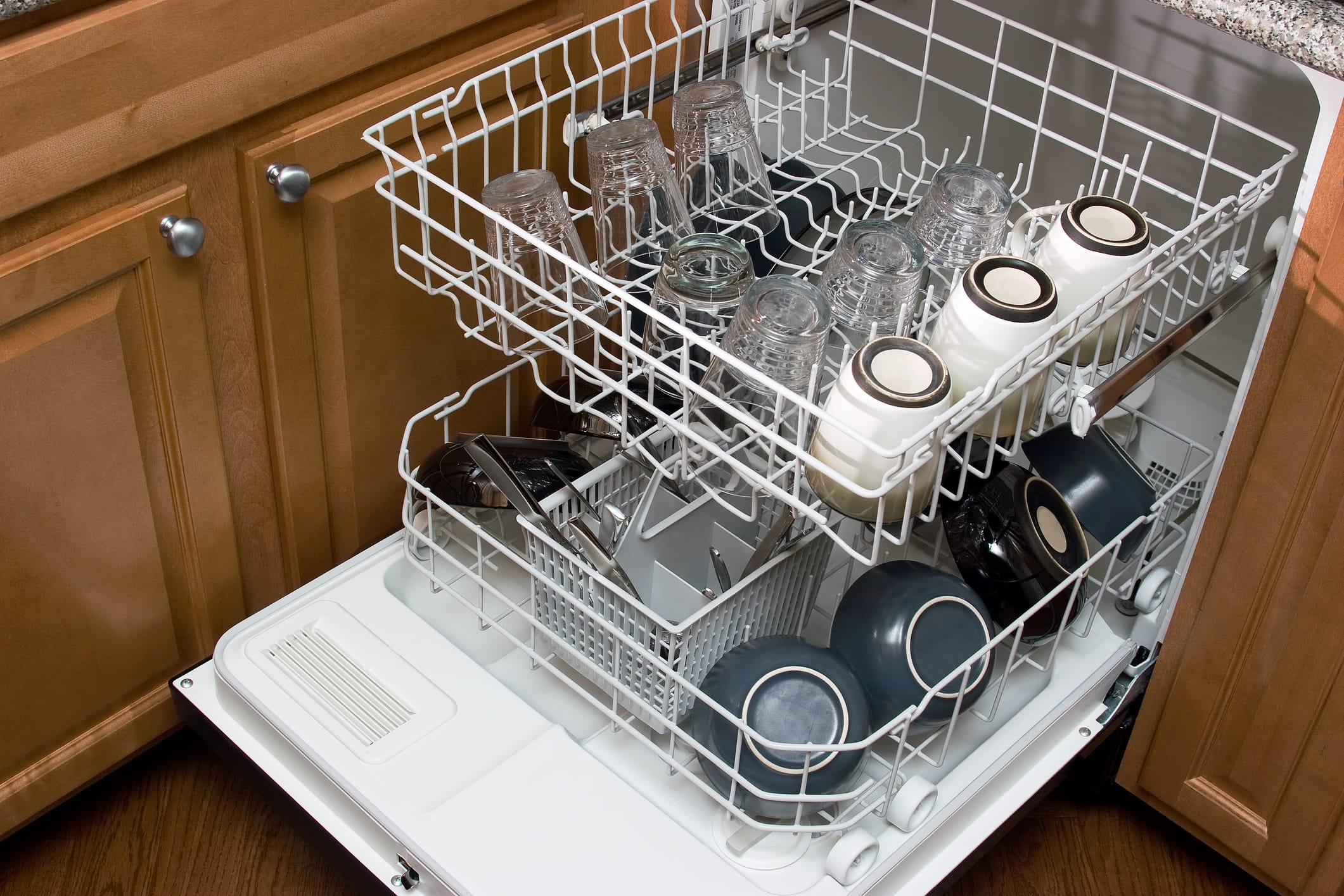
What Is the Average Lifespan of a Dishwasher?
Around a decade is a reasonable expectation for most modern dishwashers. However, dishwasher lifespan can vary considerably from one household to another.
A dishwasher used once or twice every day experiences more wear than one used a few times per week. The quality of the original appliance and its components also matters, as does how well it has been maintained over the years.
That means two identical dishwashers installed at the same time may not necessarily fail at the same age.
As your dishwasher approaches the 10-year mark, start paying closer attention to changes in cleaning performance, noises, leaks, drainage, and repair frequency. You do not necessarily need to replace it proactively, but knowing its age can help you make smarter repair decisions.
What Affects How Long a Dishwasher Lasts?
There is no single factor that determines when a dishwasher will stop working. Instead, its lifespan reflects years of use and the conditions under which it operates.
Some of the biggest factors include:
- Frequency of use: Running multiple cycles every day naturally puts more wear on pumps, seals, racks, and other components.
- Maintenance: Cleaning the filter, spray arms, door seals, and interior can help prevent unnecessary buildup and performance problems.
- Water quality: Hard water can leave mineral deposits on internal dishwasher components over time.
- Loading habits: Overloading can interfere with spray arms and prevent water from circulating correctly.
- Detergent use: Using the appropriate dishwasher detergent in the recommended amount can help reduce residue and buildup.
- Appliance quality: Construction, components, and overall durability can vary between models and manufacturers.
Following the manufacturer's maintenance recommendations is one of the simplest ways to give your dishwasher the opportunity for a long service life.
Maintenance Can Help Your Dishwasher Last Longer
Dishwashers do a lot of dirty work, so they need to be cleaned, too.
Food particles, grease, detergent residue, and mineral deposits can gradually accumulate inside the appliance. Regular cleaning helps keep water flowing properly and reduces unnecessary strain on components.
Clean the dishwasher filter according to your owner's manual, and inspect the spray arms for clogged openings. Wipe down the door gasket and periodically clean the interior using a dishwasher-safe cleaning method recommended by the manufacturer.
Also pay attention to small changes in performance. A dishwasher that suddenly drains slowly or leaves dishes dirty may have a relatively simple problem that is easier to address before it develops into something larger.
Does Newer Dishwasher Technology Affect Lifespan?
Newer dishwashers have become increasingly sophisticated. Many models include soil sensors, multiple wash zones, adjustable racks, specialized drying systems, Wi-Fi connectivity, and advanced electronic controls.
Modern energy-efficient dishwashers can also use less water and energy than older models. That can make replacing an aging dishwasher attractive even if it technically still works.
However, more technology also means more components that could potentially require repair. Electronic control boards, sensors, and specialized components can sometimes be more expensive to replace than simpler mechanical parts.
Efficiency and features should therefore be considered alongside reliability when you're shopping for a new appliance.
Signs Your Dishwasher May Be Nearing the End of Its Life
A single clogged filter does not mean your dishwasher needs to go. Multiple recurring problems are more concerning.
Watch for warning signs such as:
- Dishes consistently coming out dirty
- Water remaining at the bottom after a cycle
- Recurring leaks
- Cracks or significant deterioration inside the tub
- Rust or corrosion
- Unusual grinding, buzzing, or rattling noises
- Door latch or seal problems
- Cycles that stop unexpectedly
- Frequent error codes
- Repeated repairs
- Increasingly expensive repair estimates
Some of these symptoms can have relatively inexpensive solutions. Others may point to failing pumps, motors, electronic controls, or other major components.
The appliance's age helps put those problems into context. A relatively inexpensive repair on a four-year-old dishwasher may be an easy decision. The same repair on a 13-year-old appliance with other developing problems deserves more consideration.
Should You Repair or Replace an Old Dishwasher?
There is no universal age at which repairing a dishwasher stops making sense.
Instead, compare the dishwasher's age, overall condition, repair estimate, and likely replacement cost. You should also consider whether other parts of the appliance appear to be deteriorating.
Repair may make more sense when the dishwasher is relatively young, otherwise reliable, and experiencing an isolated problem. Issues involving door seals, clogged components, or certain replaceable parts may be worth fixing.
Replacement becomes more attractive when an older dishwasher requires frequent service or a major component fails. Spending heavily on one repair can be difficult to justify if another age-related problem is likely to appear soon afterward.
If you're unsure, ask the appliance repair professional what failed, how much the complete repair will cost, and whether there are signs of other significant wear.
When Does Dishwasher Replacement Make More Sense?
Age is only part of the equation.
Imagine that your 11-year-old dishwasher still works but has become louder, occasionally fails to drain, and no longer cleans dishes consistently. Even if each problem could potentially be repaired, the combination may suggest that the appliance is approaching the end of its practical lifespan.
A newer dishwasher may also provide benefits beyond reliability. Depending on the model, you could gain better energy efficiency, lower water consumption, quieter operation, improved rack configurations, and features better suited to your household.
If you're repeatedly spending money to keep an aging appliance running, it may be time to put those repair dollars toward a replacement instead.
What to Look for When Buying a New Dishwasher
The "best" dishwasher is not necessarily the one with the longest feature list. Focus on the features your household will actually use.
Consider factors such as capacity, rack configuration, noise rating, energy and water efficiency, cycle options, drying performance, and expected reliability. Measure your available space carefully, especially if you're replacing an older appliance in existing cabinetry.
Also research:
- Manufacturer warranty coverage
- Availability and cost of replacement parts
- Local repair availability
- ENERGY STAR certification
- Customer reviews regarding long-term reliability
- Installation requirements
A lower purchase price can be appealing, but the total value of an appliance also depends on how well it performs and how reliably it serves your household over time.
Don't Forget About Installation
Even a high-quality dishwasher can experience problems if it is not installed correctly.
Dishwashers need proper electrical, water supply, and drainage connections. An installation problem can contribute to leaks, drainage issues, or poor operation and may potentially affect warranty coverage depending on the circumstances.
Professional installation may be worthwhile if you're uncomfortable working with plumbing or electrical connections. It can also provide an opportunity to make sure existing connections are in suitable condition before the new appliance is put into service.
Key Takeaways
Most dishwashers last approximately 9 to 12 years, although actual dishwasher lifespan varies based on usage, maintenance, water conditions, appliance quality, and other factors.
Routine maintenance can help you get more life from your appliance. Keep the filter and spray arms clean, use the appropriate detergent, load the dishwasher correctly, and address performance changes before they become bigger problems.
When an older dishwasher needs repair, consider more than the immediate bill. Its age, condition, repair history, efficiency, and the cost of replacement can all help you decide whether repairing or replacing it offers better long-term value.
FAQs About How Long Dishwashers Last
Protect Your Dishwasher and Other Home Appliances With Dwellness
Knowing how long dishwashers last can help you prepare for repairs and eventual replacement, but appliances do not always wait until a convenient time to stop working. Even a properly maintained dishwasher can experience an unexpected breakdown from normal wear and tear.
Dwellness helps Las Vegas homeowners protect covered home appliances and major systems from eligible breakdowns, making unexpected repair costs easier to manage. Contact Dwellness today to learn more about our home warranty plans and find coverage designed to help protect the home you depend on every day.