
Halfway through a shower you look down and the water is at your ankles, with a film of soap floating on top. By the time you have toweled off it has gone down an inch. A shower drain clogged this way did not happen overnight. It built up for months, one strand of hair and one layer of soap scum at a time, until the opening left in the trap was too small to keep up with the showerhead. The good news is that this kind of clog is the easiest one in the house to clear, provided you use the right tools and avoid two that do real damage.
Before you reach for anything, note one detail: is it only the shower, or is the sink or toilet in the same bathroom also slow? That answer decides whether you keep reading this section or skip to the one near the end.
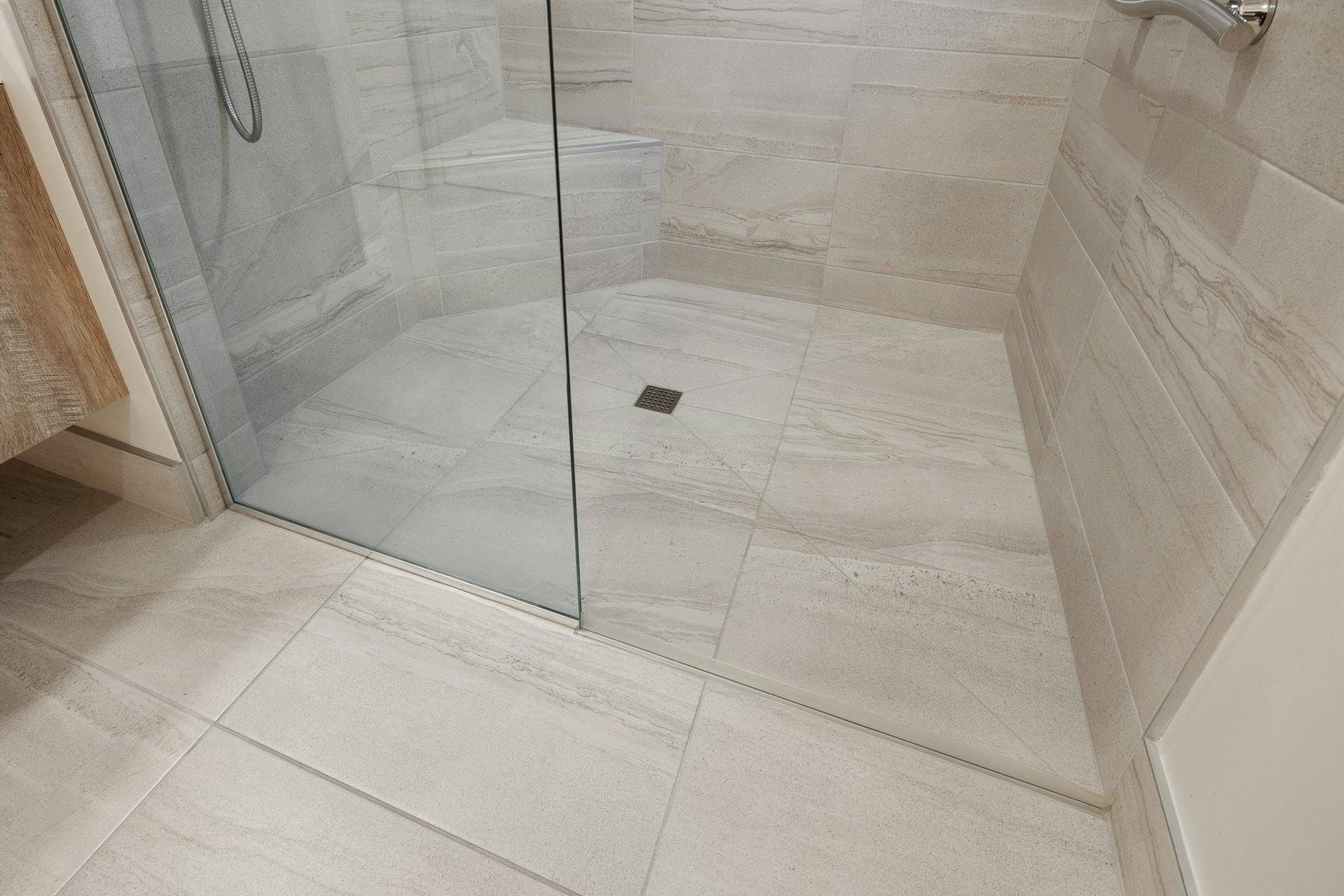
Why the clog is a rope and not a lump
Hair is the backbone of almost every shower clog. It catches on the crossbars of the strainer and on the rough inside of the drain pipe, and once a few strands are anchored, everything else sticks to them. Soap scum is the glue. In Las Vegas there is a third ingredient that makes the mess tougher than it is in soft water cities: minerals. Our water is very hard, and calcium reacts with soap to form a waxy, crusty residue that coats the hair and hardens it into something closer to felt than fluff. The Las Vegas hard water post explains the chemistry; the practical result is a clog that is dense, anchored, and sitting in the first foot or two of pipe.
That location is the key fact. The clog is almost always right under the strainer or just past the trap, within reach, which is why a hook on a stick beats a bottle of chemicals every time.
Start by pulling the strainer and looking
Most shower drains have a strainer that lifts out, unscrews, or is held by a single screw. Pop it off and shine a phone light down. Very often the clog is visible, a gray-brown mat of hair wrapped around the crossbars or sitting at the top of the trap. Pull out what you can see with needle-nose pliers or a gloved hand. If the drain runs freely after that, you are done, and the fix took four minutes.
Some newer showers have a lift-and-turn or push-pop stopper instead of a strainer. These unscrew counterclockwise from the top, and the hair wraps around the stem underneath.
A plastic hair snake does the real work
The most effective shower drain tool is a flexible plastic strip about two feet long with barbs along both edges. Push it down the drain as far as it goes, twist a few times, and pull it back out slowly. The barbs catch the hair rope and drag it up with it. Expect to do this three or four times, and expect what comes out to be unpleasant. Run hot water for a minute afterward to flush the loosened scum.
A small hand-crank drum auger with a quarter-inch cable is the step up from the plastic strip, and it will reach through the trap and a few feet beyond. Feed it in gently, crank when it meets resistance, and pull back. Do not force it; a shower trap has tight bends, and a cable jammed around one is a problem a plumber then has to solve.
Hot water and dish soap soften what the snake leaves behind
Once the hair is out, the pipe walls are still coated in soap and mineral scum, and that film is what the next clog builds on. Pour a kettle of very hot water (not boiling, if the drain is PVC) down the drain, followed by a squirt of dish soap and another kettle. Dish soap is formulated to cut grease and soap residue, and hot water softens the scum enough to move it. Baking soda followed by vinegar makes a satisfying fizz but does little beyond deodorizing; the hot water is what matters.
An enzyme-based drain treatment used monthly is a reasonable maintenance habit for a shower that clogs often. Enzymes digest organic residue slowly and do not harm pipes. They will not clear an existing clog; they keep a cleared drain from building a new one.
A plunger works, if you seal the overflow
A cup plunger on a shower drain works better than most people expect, because the clog is close and the water column over it is short. If the shower is full of standing water, bail most of it out with a cup or a wet-dry vacuum first, leaving just enough to cover the plunger cup. Press down to seal and pump firmly a dozen times. If the shower is a tub-shower, cover the overflow plate with a wet rag and hold it, or the pressure escapes there instead of pushing on the clog.
Two fixes that make a shower clog worse
Chemical drain cleaners are the first. The caustic or acid products sold for clogs generate heat as they react, and a hair clog that does not dissolve leaves that hot, corrosive liquid sitting in the trap. It can soften PVC, pit older metal pipe, and damage the finish of the shower pan. Worse, if it does not work, the next person to open that drain, which may be you with a snake or a plumber with a cable, gets splashed with it. Plumbers routinely refuse to cable a drain that has chemical cleaner sitting in it until it is flushed. If you have already poured some in, never add a second product on top of it (mixing cleaners, or a cleaner with bleach or vinegar, can release fumes), run lots of water through before trying anything else, and tell the plumber.
A straightened coat hanger is the second. It seems like a free hair snake, but the stiff wire scratches the inside of the pipe, snags on the trap bend, and often pushes the clog deeper rather than pulling it up. The scratches become the anchor for the next clog. A plastic barbed strip is the right tool and it is inexpensive.
A third, gentler mistake: pouring boiling water into a shower with a plastic drain body or an acrylic pan. Hot tap water is fine. A rolling boil can warp fittings.
When it is not the shower drain at all
This is where that opening question matters. If the sink and toilet in the same bathroom are also slow, or if running the shower makes the toilet gurgle, the clog is not under the strainer. It is further down, in the branch line that serves the bathroom or in the main line that serves the house. Signs that point to the main: more than one bathroom affected, water backing up into the shower when the washing machine drains or a toilet flushes, and a sewer smell from the drains.
That is not a hair snake job. A main line stoppage needs a plumber with a long cable or a hydro jetter, and in older Las Vegas neighborhoods with clay or cast iron sewer laterals, roots and pipe deterioration are often involved. Stop running water in the house if sewage is coming up anywhere, because every gallon down the drain is a gallon that comes back into the lowest fixture, which is usually a shower. The post on home warranty sewer line coverage covers what happens when the problem is outside the house.
Where a home warranty picks up the drain
A hair clog you can clear with a strip and a kettle is a chore, not a claim. A stoppage that needs a plumber's cable is a different matter, and it is one of the most common plumbing service requests there is. Dwellness plans cover plumbing stoppages as part of the plumbing system, starting with the Essential Plan, and the drain cleaning home warranty page explains what a drain cleaning claim typically involves. You submit the request online around the clock or call (702) 641-8888, pay the service fee for the visit, and a licensed local plumber is sent out.
What a warranty generally does not cover is damage from a chemical cleaner, a foreign object someone dropped down the drain, or a stoppage caused by something outside the home's plumbing as the contract defines it, which is why the sewer line question above deserves its own post. The wider plumbing home warranty page covers the rest of the system, and the plumbing maintenance tips post has the habits that keep drains out of the claims queue entirely.
Most shower clogs end with a handful of wet hair in the trash and a drain that swallows water like it did when the house was new. The ones that do not end that way are telling you something about the line beyond the trap, and that is when a plan that already covers plumbing stoppages earns its keep. Dwellness has been covering that kind of problem for Las Vegas homeowners since 1986, and you can request a free quote at dwellness.house any time, or call (702) 509-7007 during office hours.